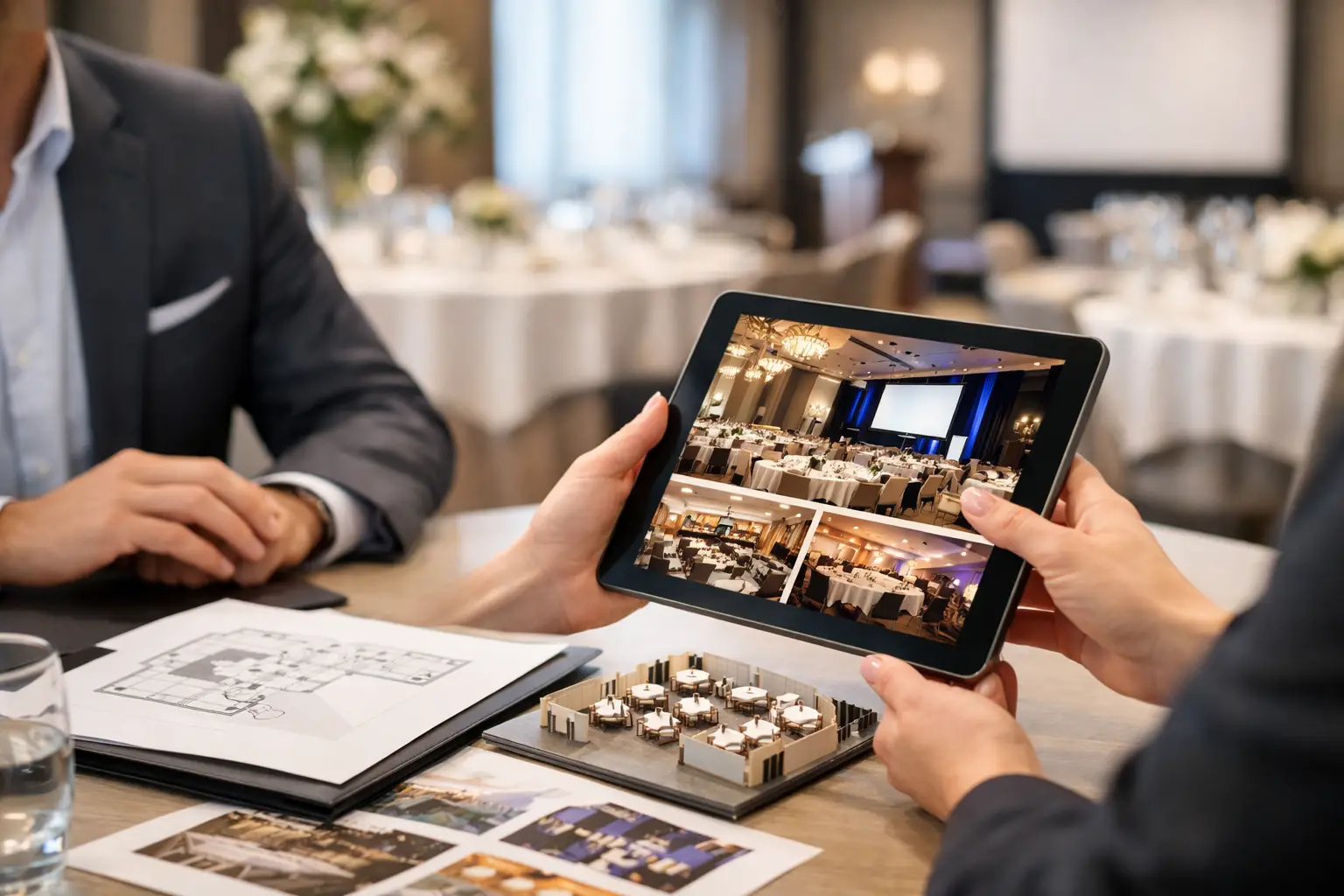
A venue can look perfect on paper and still fail the moment your delegates arrive. The real issue is rarely the room itself. It is the corporate venue booking process behind it – how quickly requirements are clarified, how thoroughly options are vetted, and how well costs, contracts and logistics are controlled before anything is signed.
For corporate teams, that process needs to do more than secure a date and a space. It needs to protect budget, reduce internal admin, support brand standards and leave no gaps between venue sourcing, accommodation and event delivery. When deadlines are tight, a structured approach is what keeps decisions fast without creating expensive problems later.
At its best, the corporate venue booking process gives you clarity early. It narrows a long list of possible venues into a short list that genuinely fits your event, your audience and your operational needs. That sounds straightforward, but in practice it is where many teams lose time.
A rushed search often leads to avoidable compromises. The venue may be available but poorly located. The day delegate rate may look competitive but exclude key items. The meeting space may work for presentations but not for registration, breakouts or networking. By the time those issues surface, teams are already invested in the option.
A strong process avoids that drift. It creates a clear brief, compares venues consistently, tests the commercial terms and checks whether the venue can support the full event journey, not just the main room.
Every efficient venue search starts with detail. Not pages of internal notes, but a brief that answers the questions suppliers need in order to respond accurately.
That means confirmed or provisional dates, attendee numbers, event type, preferred location, budget parameters, room layout, catering expectations, AV requirements and any accommodation needs. It should also include the practical realities that often get left out, such as accessibility, branding opportunities, security expectations, sustainability criteria and arrival patterns.
The more precise the brief, the faster you can rule venues in or out. It also reduces the back-and-forth that slows decision-making. If your event has moving parts, such as a conference followed by dinner, or a meeting with overnight stays, those elements need to be captured from the outset. A venue that works for one part of the programme may not work for the rest.
Once the brief is clear, the next stage is to identify venues that can genuinely deliver against it. This is where experience matters. A broad search may produce dozens of options, but quantity is not the same as relevance.
A useful shortlist balances fit, availability and value. It should reflect venue style, capacity, location, service standards and commercial terms. It should also account for the less visible factors that affect event delivery, such as staff responsiveness, flexibility on timings, loading access, bedroom allocations and quality of on-site support.
This is often where corporate teams benefit from a venue finding partner. Instead of contacting venues one by one, chasing proposals and trying to compare inconsistent responses, they receive a tighter set of options already aligned to the brief. That saves time, but more importantly, it improves the quality of the decision.
Price matters, but headline rates rarely tell the full story. A lower room hire can be offset by higher catering minimums, service charges, AV costs or accommodation rates. Equally, a venue with a higher initial quote may offer better overall value once concessions and inclusions are negotiated.
This part of the corporate venue booking process needs discipline. Like-for-like comparisons are essential. Ask what is included, what is optional and what triggers extra spend. Check cancellation terms, deposit schedules, minimum numbers and any clauses linked to attrition.
There is also a timing issue. Delayed decisions can reduce leverage, especially in busy periods. If a preferred venue is in demand, the balance between negotiation and speed becomes important. Pushing too hard for incremental savings can sometimes cost you the date altogether. It depends on market conditions, the event profile and how many realistic alternatives you have.
A site visit is not just a formality. It is the point where a polished proposal meets operational reality.
The obvious checks matter – room quality, circulation space, catering areas, toilets, signage and overall presentation. But corporate buyers should also test how the venue will function under live event conditions. Where will registration sit? Can delegates move easily between sessions? Is there enough back-of-house space for speakers, production or event materials? If bedrooms are involved, how practical is the check-in process for a group arrival?
It is also worth assessing the people, not just the property. A capable venue team can solve problems quickly and make delivery smoother. A slow or inflexible team can create friction throughout the planning period. Responsiveness during the sales stage is often a useful indicator of how the relationship will feel later.
Negotiation is not only about securing a better rate. It is about reducing risk.
That can include flexible release dates on bedrooms, more favourable cancellation terms, complimentary upgrades, extended access times, reduced minimum spends or agreed package inclusions. For larger events, there may also be room to negotiate value across multiple areas rather than on one visible line item.
This is another area where buying power and supplier relationships make a difference. Venues are more likely to offer stronger terms when they know the enquiry is credible and well managed. A process-led partner can often move discussions forward faster because expectations are clear, communication is centralised and the venue is not dealing with fragmented requests from multiple stakeholders.
Once the preferred option is selected, the contract stage needs careful attention. It is easy to treat this as paperwork, but it is where assumptions become obligations.
Check that the schedule reflects the agreed spaces, timings, rates and inclusions. Make sure bedroom allocations, catering commitments, AV details and payment terms are accurate. If there were negotiated concessions, they should be written into the agreement rather than left in email chains or verbal conversations.
Internal sign-off also matters here. Procurement, finance and senior stakeholders may all need visibility before commitment. A good process keeps those approvals moving early so that the booking does not stall at the final stage.
Problems usually start with one of three issues: a vague brief, slow stakeholder alignment or poor comparison of costs and terms. None of these are dramatic on their own, but together they create delay, confusion and budget drift.
Another common issue is separating venue sourcing from the rest of the event plan. If accommodation, production and delegate logistics are considered too late, the chosen venue may start to look less suitable. What appeared to be a fast decision then creates extra admin for the internal team.
This is why joined-up support matters. When venue finding sits alongside accommodation sourcing and event delivery, decisions are made with the whole event in mind. That reduces duplication and gives planners a single point of contact rather than a trail of disconnected suppliers.
Corporate events are often planned under pressure. Dates shift, senior stakeholders change scope and attendance forecasts move. A slow response can close off good options before a business has had chance to review them.
That is why process speed is not just a convenience. It affects availability, negotiation strength and team workload. Receiving a detailed venue proposal quickly allows stakeholders to react while options are still live and before costs change.
For many organisations, the real value is not only in faster sourcing but in reducing the hours spent coordinating calls, chasing quotes and reconciling conflicting information. International Events is built around that need – giving clients a detailed venue proposal within 12 working hours and managing the process in a way that saves time, energy and cost.
The most effective venue booking process is not the one with the most steps. It is the one that gives you the right information at the right moment, keeps stakeholders aligned and turns venue selection into a controlled business decision rather than a scramble.
For some events, that may mean moving very quickly to secure a high-demand date. For others, it may mean taking longer at contract stage to protect flexibility. The right route depends on budget, complexity, lead time and how much internal resource you have available.
When the process is handled properly, venue booking stops being a drain on your team and becomes the foundation for a better event. Get the brief right, test the detail, negotiate with intent and keep the whole event in view. That is what turns a good venue choice into a dependable outcome.

Can venue finding save money? Expert sourcing reduces hire, hotel and hidden event costs, while protecting quality, control and your team’s time as well.
Read more
Hotel blocks vs direct bookings: compare cost, control and delegate experience to choose the right accommodation approach for your corporate event needs.
Read more
Our event sourcing process explained: how to brief, compare venues, negotiate rates and secure the right setting for a successful corporate event every time.
Read more
Copyright International Events Incorporated.
All rights reserved
Copyright International Events Incorporated.
All rights reserved

Fill in the following details. We respect your privacy, we don’t spam.
Fill in the following details. We respect your privacy, we don’t spam.  Or call us on 07715 242282
Fill in the following details. We respect your privacy, we don’t spam. Or call us on 07715 242282


 Enquire now


