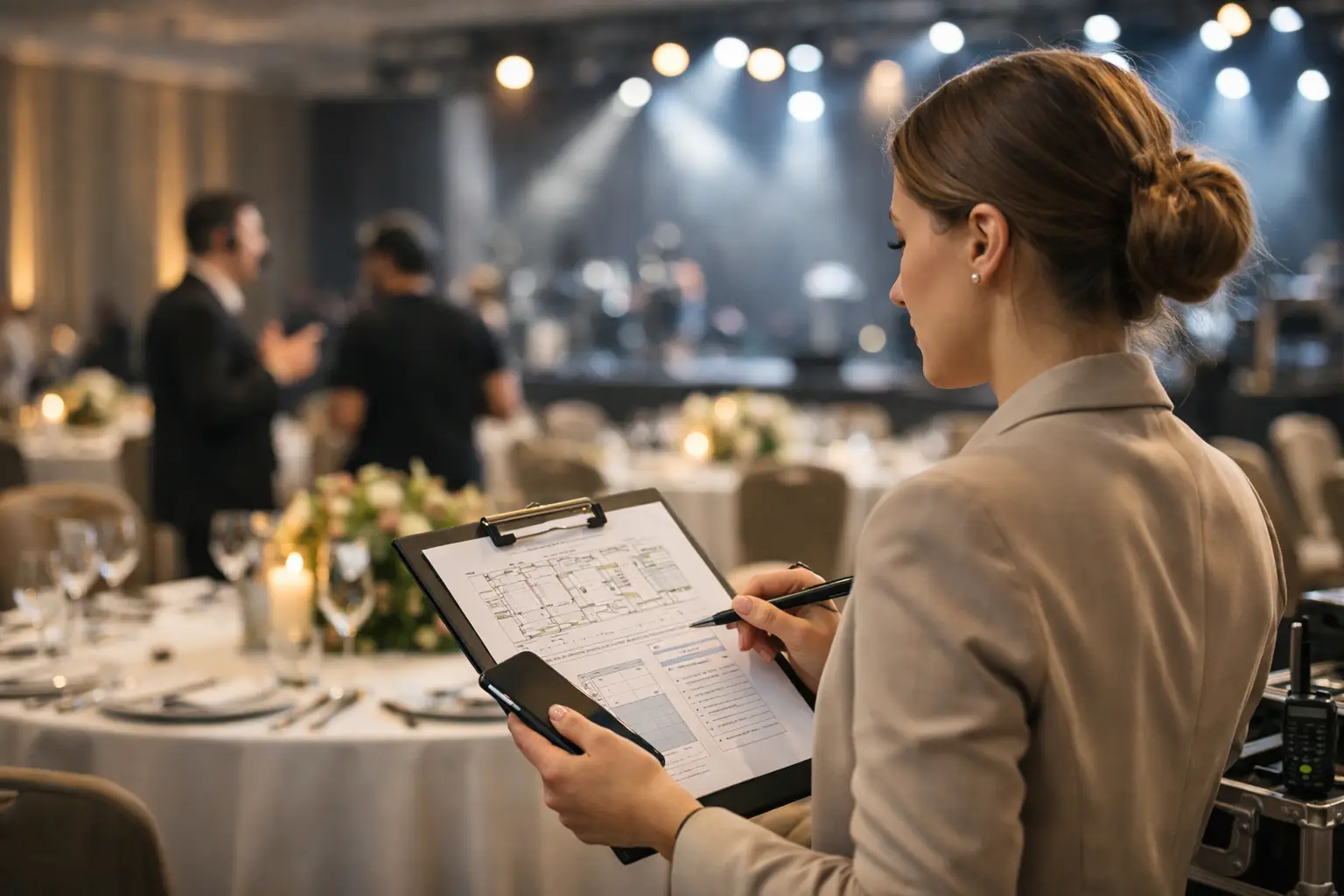
A corporate event rarely goes wrong because of one big decision. More often, it slips off course through a series of small misses – a venue brief that is too vague, hotel allocations confirmed too late, suppliers working from different schedules, or no clear owner for last-minute changes. That is why knowing how to manage event logistics matters so much. Good logistics protect the attendee experience, the budget, and your team’s time.
For corporate planners, logistics is not just transport and timings. It is the full operational system behind the event. Venue, accommodation, delegate movements, room sets, catering schedules, AV, branding, registration, supplier access, contingency planning and on-site delivery all need to connect. If one part is weak, the pressure lands on your internal team.
The strongest events begin with clarity, not creativity. Before you approach venues or suppliers, define what the event must achieve. A leadership conference, an awards dinner and a staff summer party all require very different logistical plans, even if the guest numbers are similar. The audience profile, event format, timing and business objective shape every operational decision that follows.
Start by fixing the essentials early: preferred date range, location, guest numbers, budget, room requirements, accommodation needs and non-negotiables such as accessibility, security or sustainability standards. This gives you a workable brief rather than a wish list. It also helps suppliers respond accurately, which saves time and avoids expensive rework later.
There is a trade-off here. Moving quickly is important, but moving without a detailed brief often creates delays further down the line. A fast venue proposal is only useful if the brief behind it is sound.
Event logistics become difficult when information sits in too many places. One spreadsheet for the venue, another for bedrooms, a separate email trail for catering changes, and a slide deck with old timings is how mistakes happen. Keep one central working document that records the latest decisions, owners, deadlines and supplier updates.
For larger events, this should include a master schedule, attendee numbers by category, rooming information, supplier contacts, setup times, delivery restrictions and approval points. Internal stakeholders should know where the live version sits and who can sign off changes. Without that discipline, even experienced teams can lose control.
If the venue is wrong, the event becomes harder to manage from the start. The right space does more than look good in a proposal. It supports registration flow, breakout movement, catering service, production requirements and delegate comfort. It should also fit the event financially once hidden costs are considered.
A lower day rate can be misleading if the venue has limited built-in AV, inflexible access times, expensive furniture hire or poor nearby accommodation options. Equally, an impressive central venue may not suit a conference if delegate bedrooms are scattered across multiple hotels. Logistics and cost control are closely linked.
When assessing options, look beyond capacity. Ask how people will move through the space, where bottlenecks may appear, when the venue can grant access, and what operational support is included. For business events, practical suitability often matters more than headline appeal.
This is where specialist support can remove a considerable amount of pressure. A venue partner with buying power and strong supplier knowledge can narrow the market quickly and identify issues before they affect delivery.
For conferences and multi-day meetings, hotel coordination should be treated as core logistics. If delegates cannot access the right rooms at the right rates, the event experience suffers before the first session begins. It also creates unnecessary administration for internal teams.
Room blocks, cut-off dates, delegate booking processes, cancellation terms and proximity to the venue all need to be agreed early. If guests are spread across several properties, transport planning becomes more complex. If the event has VIPs, speakers or senior stakeholders, their accommodation arrangements should be handled separately with tighter oversight.
One of the most reliable ways to manage event logistics is to build the plan backwards from the live date. Start with what must happen on the day, then map every dependency in reverse. Final numbers affect catering. Catering affects room layouts. Room layouts affect production plans. Production plans affect access times and staffing.
This approach exposes the real critical path. It shows which deadlines can move and which cannot. It also makes stakeholder sign-off easier because everyone can see the impact of late decisions.
Your timeline should include internal approvals as well as supplier actions. Many event delays are not caused by suppliers failing to deliver. They are caused by waiting for internal feedback on guest lists, branding, menus or budgets. If several departments are involved, make accountability explicit from day one.
At minimum, the logistics timeline should track venue contract points, bedroom release dates, registration milestones, production deadlines, print and branding cut-offs, catering confirmations, staffing schedules and final event orders. For larger events, travel arrangements, security reviews and health and safety documentation should sit within the same operational framework.
You do not need a complicated system. You need a reliable one that is updated consistently.
Most event problems appear in the gaps between suppliers. The AV team assumes the venue is supplying power drops. The caterer expects access through a loading bay that closes at 4 pm. The florist arrives before the room is clear. Each supplier may be competent, but without central coordination the event becomes vulnerable.
That is why one point of contact matters. Someone needs to own the full picture, communicate the latest schedule, confirm dependencies and challenge assumptions. For busy corporate teams, this single point of control is often the difference between a manageable event and a draining one.
Supplier briefs should be specific, written and shared in good time. Verbal agreements are useful for speed, but they are not enough on their own. Everyone should be working from the same timings, floorplans and contact list.
It also helps to distinguish between essential suppliers and desirable extras. If budget pressure appears, you need to know what protects the event outcome and what can be scaled back without affecting the delegate experience.
Experienced planners do not assume the day will run exactly as planned. They identify where pressure is most likely to build and create backup options. Registration queues, delayed room turnarounds, speaker no-shows, transport disruption, AV failure and catering overruns are common stress points.
Contingency planning does not need to be dramatic. Often it is about simple decisions made early: keeping spare signage on site, allowing buffer time between sessions, holding a few extra bedrooms, printing a backup run sheet and confirming who can approve spend if a same-day issue arises.
The level of contingency depends on the scale and visibility of the event. A board meeting has different risk exposure from a 500-person conference. What matters is that the plan matches the stakes.
Even a well-planned event can feel chaotic if on-site management is weak. The final run sheet should be precise, practical and easy to use under pressure. It needs timings, contacts, room allocations, supplier movements, cue points and escalation routes.
A good on-site lead is calm, decisive and present where decisions need to be made. They are not buried in email while suppliers wait for answers. They are managing flow, checking standards and solving issues before attendees notice them.
This is also the moment when a detailed pre-event process pays off. If everyone knows their role, the day feels controlled. If roles are unclear, small problems quickly become public ones.
Many internal teams can plan an event. Fewer have the spare capacity to manage the operational detail at speed, especially when the event sits alongside their main role. That is where external support becomes commercially sensible, not just convenient.
The right event partner can source venues quickly, negotiate better rates, coordinate suppliers, manage accommodation and keep the entire process moving through one experienced contact. For organisations under time pressure, that removes friction and protects internal resource. International Events does this particularly well by combining fast venue sourcing with hands-on event management and hotel coordination.
There is no single formula for every event. A straightforward meeting may need light-touch support, while a multi-day conference with delegates travelling from several locations will need far more control. The key is recognising complexity early and putting the right structure around it.
When logistics are managed well, the event feels easy to the people attending and far less burdensome to the people responsible for delivering it. That is usually the clearest sign that the planning was done properly.

Can venue finding save money? Expert sourcing reduces hire, hotel and hidden event costs, while protecting quality, control and your team’s time as well.
Read more
Hotel blocks vs direct bookings: compare cost, control and delegate experience to choose the right accommodation approach for your corporate event needs.
Read more
Our event sourcing process explained: how to brief, compare venues, negotiate rates and secure the right setting for a successful corporate event every time.
Read more
Copyright International Events Incorporated.
All rights reserved
Copyright International Events Incorporated.
All rights reserved

Fill in the following details. We respect your privacy, we don’t spam.
Fill in the following details. We respect your privacy, we don’t spam.  Or call us on 07715 242282
Fill in the following details. We respect your privacy, we don’t spam. Or call us on 07715 242282


 Enquire now


