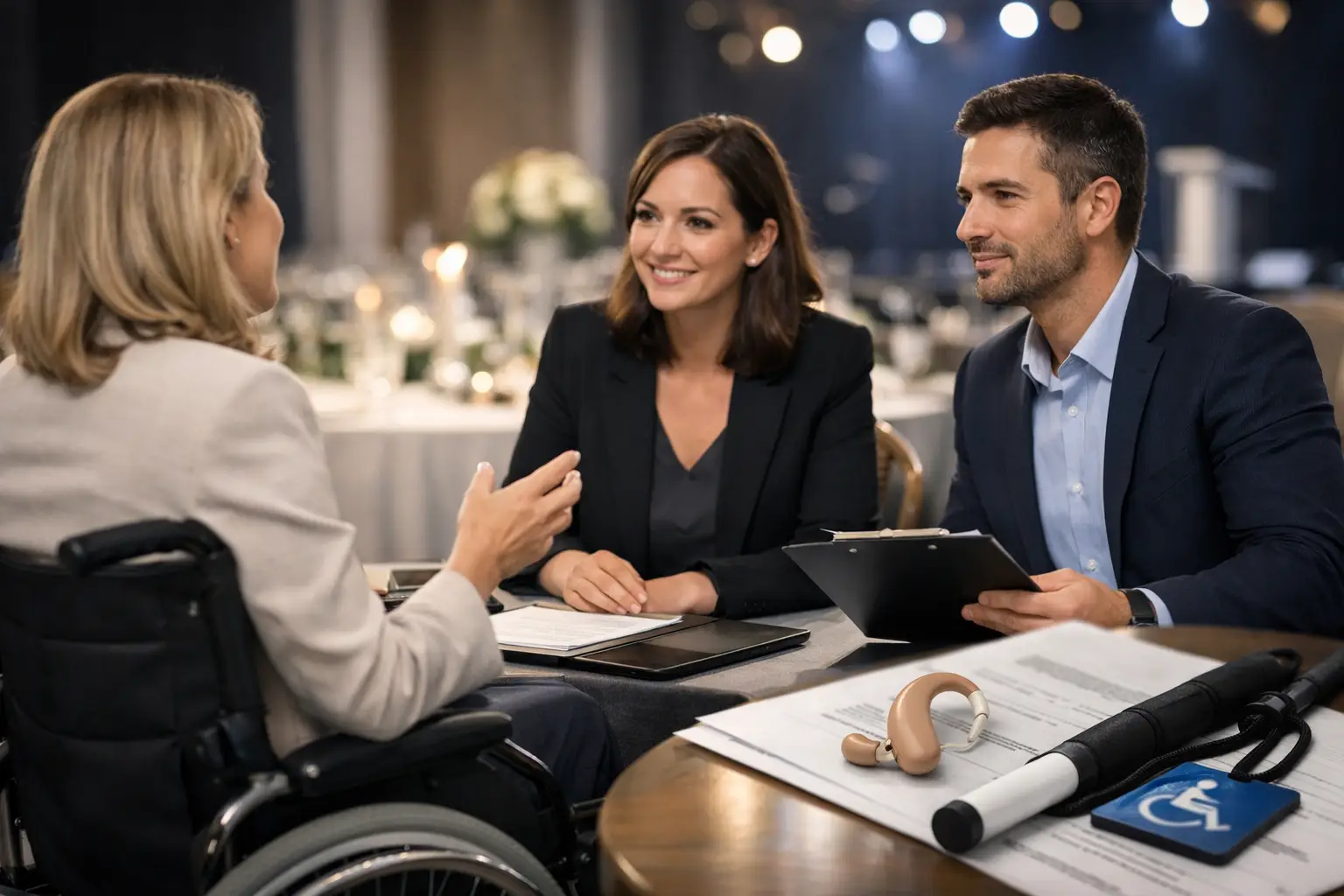
A venue can look perfect on a site visit and still exclude a delegate before the first speaker takes the stage. A heavy entrance door, inaccessible stage route, poorly positioned registration desk or missing dietary information can turn a well-funded corporate event into a difficult experience. To coordinate event accessibility requirements effectively, treat them as a core part of event design from the first brief – not a final compliance check.
For corporate teams, this approach reduces risk, protects your organisation’s reputation and gives every delegate a fair opportunity to take part. It also avoids costly late changes, such as hiring temporary ramps, moving sessions between rooms or reprinting materials at short notice.
Accessibility needs are individual. One delegate may need step-free access and a nearby parking space; another may need British Sign Language interpretation, a quiet room, large-print materials or advance access to presentation slides. Asking broad questions early gives people a clear route to share what would help without requiring them to disclose more personal information than necessary.
Include an accessibility question in registration and invitations, alongside a named contact who can respond promptly and confidentially. Avoid asking simply whether anyone has “special requirements”. More useful wording asks whether there are any access, communication, dietary or accommodation requirements the event team should plan for.
The initial event brief should also set out the format, audience profile, timings, venue location, travel expectations and any planned activities. Accessibility is affected by every one of these decisions. An awards dinner with a raised stage presents different considerations from a two-day conference with breakouts, networking and hotel stays.
The right venue is the foundation of an inclusive event, but “wheelchair accessible” is not enough information to make a reliable decision. It can mean a step-free main entrance while leaving inaccessible meeting rooms, narrow internal doors or no practical route to the stage.
A thorough venue review should consider the entire delegate journey: arrival, registration, meeting spaces, catering, toilets, networking areas, accommodation and departure. Check whether step-free routes are genuinely usable, rather than technically available via a service corridor or a route that requires staff assistance.
Ask the venue for clear, current details on entrance widths, lifts, accessible toilet locations, accessible bedrooms, accessible parking, drop-off arrangements and evacuation procedures. Confirm the route from each relevant point, particularly if your programme uses multiple rooms or floors.
For presentation spaces, establish whether speakers and delegates can access the stage without steps, whether lecterns can be adjusted, and where interpreters or captioning screens can be positioned without blocking sightlines. Seating plans should allow wheelchair users to sit with colleagues rather than being placed at the edge of the room.
Accommodation needs deserve the same attention. An accessible room is only useful if it is available for the correct nights, close enough to event spaces and configured appropriately for the guest. Confirm the room type directly with the hotel, including bathroom layout, bed height, alarms and any companion room requirements.
This is where an experienced venue sourcing partner adds practical value. International Events can build access questions into the sourcing process from the outset, helping teams compare suitable options quickly rather than spending days chasing fragmented venue information.
A packed agenda can create barriers even in an accessible building. Allow realistic transfer time between sessions, particularly where lifts, large delegate numbers or longer routes are involved. Avoid scheduling essential content in spaces that have a different level of access from the main room.
Consider lighting, sound and crowd flow as carefully as furniture plans. Dim walkways, loud networking areas and tightly packed cabaret layouts can make an event difficult to navigate for people with mobility, sensory or neurodivergent needs. A quieter space away from the main activity may be valuable at conferences, all-day meetings and high-energy social events.
Catering should be planned with clear allergen information, appropriate service heights and enough seating. Dietary requirements are not an afterthought for the banquet team to resolve on the day. Share confirmed needs in good time, agree how meals will be identified discreetly and ensure serving staff understand the process.
For outdoor summer parties or team-building events, assess ground conditions, weather contingencies, accessible toilets, shelter and transport between activity areas. A gravel path, steep lawn or temporary structure can change the accessibility picture considerably.
An inclusive event starts well before check-in. Send joining instructions early and in a format that is easy to read on different devices. Include practical details: the nearest accessible station route, step-free entrance location, parking arrangements, who to contact on arrival and what to expect from security.
Use plain language, meaningful headings and high colour contrast in event communications. Avoid placing key instructions only in images or relying on colour alone to distinguish information. If slides, agendas or supporting documents will be used, offer them in advance where possible so delegates can use their own assistive technology or prepare for the session.
For live content, decide early whether you need captioning, interpretation, hearing support or other communication adjustments. These services require suitable space, technical testing and clear briefing for speakers and production teams. Leaving them until the final week limits supplier availability and raises costs.
Accessibility can fall between the venue, organiser, production supplier and hotel unless one person owns the plan. Nominate an event lead who understands the agreed arrangements and has authority to resolve issues quickly. They should have a concise access plan covering key contacts, delegate requests, room routes, equipment, catering instructions and contingency actions.
Brief front-of-house teams, hosts, security, caterers and AV technicians before doors open. They do not need confidential medical details, but they do need to know what service has been promised and how to respond respectfully. The aim is helpful, calm support without making anyone feel singled out.
Run a practical walk-through from the delegate perspective. Test the route from drop-off to registration, check signage at eye level, use the lift, inspect accessible toilets and stand where a delegate would sit during presentations. This often reveals simple issues that floorplans and venue brochures miss.
Evacuation planning is particularly important. Discuss personal emergency evacuation procedures where appropriate, identify refuge points and ensure venue staff can explain the process. Do not assume a standard evacuation plan works for every attendee or every room configuration.
A repeatable accessibility checklist saves time across a busy events programme, especially for organisations running conferences, roadshows and staff events in multiple locations. However, no checklist can replace a conversation with the people attending. Requirements may change, and a delegate’s preferred solution may differ from what the organiser assumes.
There are trade-offs. A city-centre venue may offer excellent public transport but limited accessible parking. A historic property may be ideal for an awards dinner but require carefully managed routes and room choices. The answer is not to rule out every venue with a constraint; it is to identify the constraint honestly, confirm whether it can be managed and give decision-makers the information to choose with confidence.
Budget is also a factor, particularly for interpreting, captioning, specialist transport or additional staffing. Planning early provides more options and makes costs visible before contracts are signed. It is usually far more economical than trying to correct an unsuitable event design at the last minute.
After the event, ask delegates whether access arrangements worked in practice. Keep the question open and straightforward, and invite feedback privately as well as through the main survey. Comments about signage, room temperatures, accessible bedrooms or staff communication can improve future briefs immediately.
Record what each venue delivered well and where problems arose. Over time, this creates a more dependable preferred venue list and strengthens future supplier negotiations. More importantly, it shows delegates that their experience has informed how your organisation plans its events.
The strongest event plans leave room for people, not just programmes. When accessibility is coordinated early, checked carefully and owned on the day, delegates can focus on the conversation, content and connections that brought them there.

See a delegate booking consolidation example that cuts admin, controls hotel costs and gives your event team one clear point of contact from start to finish.
Read more
Know when to use corporate room blocks to reduce accommodation costs, protect attendance and simplify hotel coordination for business events at scale.
Read more
Learn how to measure conference attendee engagement using practical metrics that improve content, venue decisions, delegate experience and event results.
Read more
Copyright International Events Incorporated.
All rights reserved
Copyright International Events Incorporated.
All rights reserved

Fill in the following details. We respect your privacy, we don’t spam.
Fill in the following details. We respect your privacy, we don’t spam.  Or call us on 07715 242282
Fill in the following details. We respect your privacy, we don’t spam. Or call us on 07715 242282


 Enquire now


