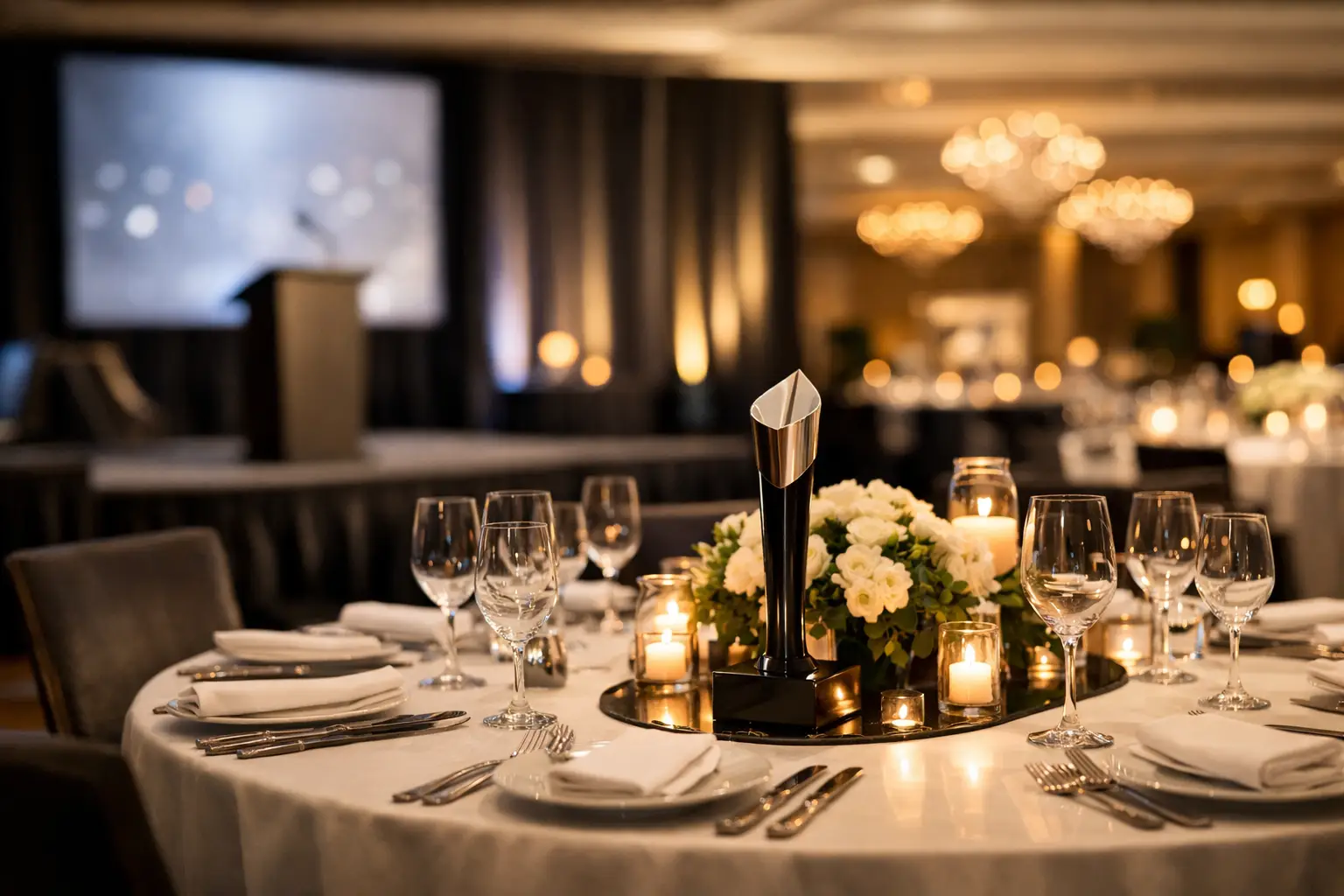
A poor venue choice shows up long before the first award is handed out. It appears in awkward room layouts, queues at the bar, patchy sound during speeches and guests leaving early because the location was never quite right. When you are comparing corporate awards dinner venues, the decision is not just about style. It affects attendance, production quality, budget control and how your brand is remembered the next day.
Awards dinners carry a different level of expectation from many other business events. They need to feel polished, celebratory and well paced, while still working with the discipline of a corporate programme. That means the best venue is rarely the one that simply looks impressive in photos. It is the one that can deliver the evening properly, with the right infrastructure, service standards and flexibility behind the scenes.
The strongest venues balance presentation with practicality. A ballroom with high ceilings and elegant finishes may look ideal, but if sightlines are poor or rigging options are limited, your production team will be forced into compromises. Equally, a modern event space with excellent technical capability can still fall short if it lacks arrival impact or does not suit the tone of the evening.
For most corporate clients, the right setting starts with guest experience. People should arrive easily, move through registration without congestion and settle into the room without confusion. The transition from drinks reception to dinner and then to awards should feel natural. If the venue layout fights against that flow, the evening becomes harder to manage and noticeably less enjoyable.
Capacity also needs careful handling. A room that is technically large enough is not always the right size. Too much spare space can make an event feel flat. Too little leaves no room for staging, entertainment, branding or service circulation. For awards dinners, scale matters because atmosphere matters.
The venue search is quicker and more accurate when the brief is clear from the outset. Before reviewing options, define the non-negotiables. Guest numbers, preferred location, budget range, target date and required format will narrow the market immediately.
Then consider the event ambition. Are you planning a formal black-tie dinner for senior stakeholders, or a higher-energy celebration with live entertainment and a more relaxed feel? Those are very different briefs. Some venues are excellent for refined dining and speeches but unsuitable for a late finish with a dancefloor. Others are better for a lively production-led event than a traditional awards ceremony.
Travel matters more than many teams expect. A central city venue may appear more prestigious, but if guests are travelling from multiple regions, access to rail links, airports and nearby hotels may have greater value. For national or international attendee groups, accommodation strategy should sit alongside venue selection, not as an afterthought.
A shortlist should never be built on appearance alone. The right evaluation looks at operational fit as well as visual appeal.
Start with layout. Ask how the space handles drinks reception, dining, stage position, screen placement and entertainment. Check whether the room shape supports good visibility for all tables. Deep rooms, awkward pillars or low ceilings can undermine the awards presentation even in otherwise attractive venues.
Then review the technical offer. In-house audiovisual support can be useful, but it is worth checking exactly what is included. Basic sound and screen packages may not be enough for an awards dinner with video content, walk-on music, presenters and branded staging. If external suppliers are required, confirm whether the venue allows them easily and whether there are any restrictions or additional fees.
Catering deserves close attention because it shapes guest perception immediately. Ask not only about menu quality, but also service speed, dietary provision and how the kitchen manages larger numbers. Awards dinners run to a tight timetable. Delays between courses can affect speeches, entertainment and the overall energy in the room.
It is also sensible to review staffing levels and event support. Some venues provide strong on-the-day coordination. Others offer the space and leave the client or agency to manage the detail. Neither model is inherently wrong, but you need to know what support you are buying.
One of the most common mistakes when sourcing corporate awards dinner venues is comparing headline prices without looking at the full cost picture. A lower room hire can quickly become expensive once catering minimums, furniture upgrades, technical extras, security, cloakroom staffing and late licences are added.
A more expensive venue can sometimes represent better value because it includes key services, has fewer restrictions and reduces the need for external suppliers. This is where experienced venue sourcing saves time and money. Knowing which costs are negotiable, which are standard and which are likely to appear late in the process makes a significant difference.
Date flexibility can help too. Thursday evenings in peak periods may cost more than midweek alternatives, and pre-Christmas dates often come with premium pricing and limited availability. If your event date has any flexibility, that should be used strategically.
Even the best venue can underperform if guest logistics are difficult. Awards dinners often involve senior leaders, regional teams, clients or nominees travelling in from different areas. If parking is limited, transport links are poor or hotel inventory is tight, attendance can suffer and the event becomes harder to manage.
This is why venue choice should be tied to accommodation planning from the start. Nearby hotel options, negotiated rates and simple booking processes reduce friction for delegates and remove a large administrative burden from internal teams. If a venue is strong in every other respect but weak on hotel access, it may still be the wrong choice.
Arrival and departure patterns also matter. If you expect a large number of guests to leave at the same time, consider taxi access, coach drop-off points and any local restrictions. Practical issues like this often seem minor until the night itself.
Some risks are easy to miss in early conversations. Slow response times from a venue can indicate future communication issues. Vague answers around minimum spends, overtime charges or supplier policies should be clarified before anything is signed. If a venue seems reluctant to confirm practical details in writing, that is worth treating cautiously.
Another red flag is inflexibility around branding and production. Awards dinners often rely on staging, screen content, lighting changes and sponsor visibility. If a venue has strict limitations that clash with your event goals, those problems usually grow rather than disappear.
Past experience with similar events is also worth checking. A venue that regularly hosts weddings or private celebrations may still be suitable, but corporate awards evenings require a different pace and standard of delivery. You want a team that understands cue sheets, rehearsals, VIP arrivals and schedule discipline.
Good venues do not stay available for long, especially in peak event seasons. Delays in approving the brief, reviewing proposals or arranging site visits can shrink your options quickly and push you into compromises on price, location or quality.
That is why many businesses choose expert support rather than handling the process internally. A structured venue search cuts through hours of back-and-forth, gives decision-makers a clearer comparison and helps secure space before the market moves. For busy teams, that speed is not just convenient. It protects the outcome.
International Events supports clients in this way by sourcing suitable options quickly, negotiating rates and coordinating the moving parts around venue, accommodation and event delivery. For teams working to tight deadlines, having one responsive point of contact reduces pressure immediately.
The venue should never be treated as a backdrop alone. It is an active part of the event experience, from the first guest arrival to the final departure. The strongest choices support the brand, fit the budget, simplify logistics and give your production and catering teams the right conditions to perform well.
That means there is rarely a single perfect venue in absolute terms. There is only the right venue for your brief, audience and priorities. A heritage setting may be ideal for one brand and completely wrong for another. A large hotel ballroom may offer better operational control than a more characterful standalone space. It depends on what the evening needs to achieve.
If you approach the search with clear objectives, realistic budget planning and a sharp eye on logistics, corporate awards dinner venues become much easier to assess. The right choice gives you more than a room. It gives you confidence that the evening will run as it should, and that is what guests remember most.

Choose the best conference hotels for delegates with a practical checklist covering location, bedrooms, meeting space, service, budget and booking control.
Read more
Compare the best delegate management platforms for corporate events, from registration and payments to reporting, integrations and hands-on support teams.
Read more
See a corporate event budget savings example showing how focused venue sourcing, hotel strategy and tighter supplier control can reduce your total spend.
Read more
Copyright International Events Incorporated.
All rights reserved
Copyright International Events Incorporated.
All rights reserved

Fill in the following details. We respect your privacy, we don’t spam.
Fill in the following details. We respect your privacy, we don’t spam.  Or call us on 07715 242282
Fill in the following details. We respect your privacy, we don’t spam. Or call us on 07715 242282


 Enquire now


