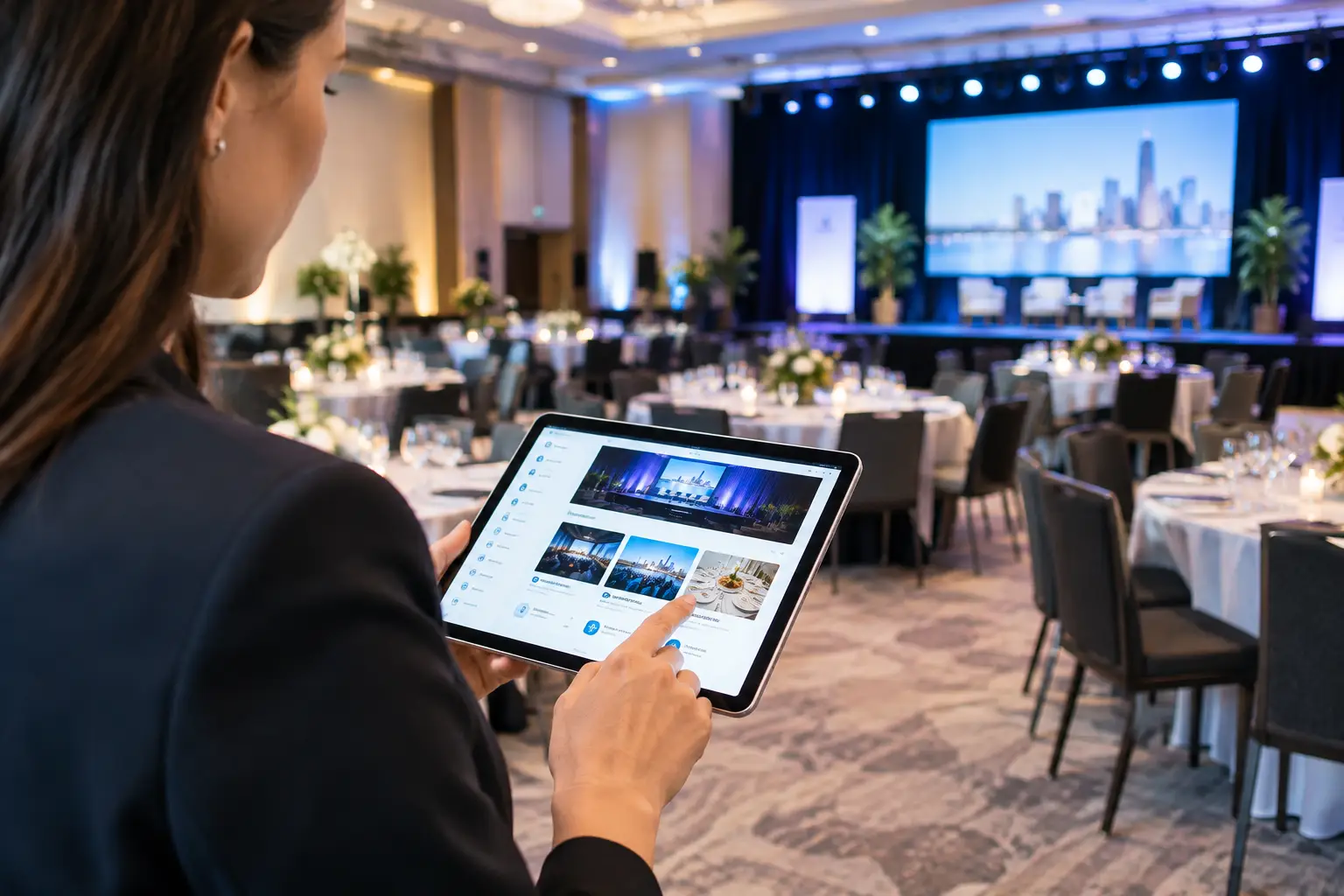
A corporate event can look perfectly organised from the guest list onwards, yet still create a significant workload behind the scenes. Registrations, dietary requirements, rooming lists, suppliers, approvals and last-minute changes all need ownership. A useful event management platform review should therefore look beyond attractive dashboards and ask a more practical question: will this system reduce pressure on your team while giving you greater control?
For conferences, awards evenings, leadership meetings and multi-location events, the right platform can bring vital information into one place. The wrong one can add another login, another manual process and another cost line. The difference lies in choosing technology that fits your event process, your people and the level of support you genuinely need.
Event platforms are often bought for registration, but registration is only one part of event delivery. Corporate teams need to manage the complete delegate journey, from an invitation and hotel booking through to check-in, attendance reporting and post-event follow-up. They also need an accurate view of budget, suppliers and responsibilities while plans are still changing.
A platform should make that work easier. At a minimum, it should provide a reliable central record of delegates, allow invitations and confirmations to be sent efficiently, capture the information your team needs and produce reports without hours of spreadsheet cleaning. For larger events, it may also need to support agenda management, mobile event apps, badge printing, virtual attendance and exhibitor coordination.
The strongest systems do not try to replace sound event planning. They give planners clearer information and fewer repetitive administrative tasks. A platform cannot negotiate a better venue rate, resolve a supplier issue or judge whether a delegate experience feels right for your brand. Those still require capable people and clear accountability.
Before comparing feature lists, define the events you run most often. A platform that works well for a 50-person internal meeting may be unsuitable for a 1,000-delegate conference with accommodation, breakout sessions and international travel. Equally, a sophisticated enterprise system can be unnecessary for a team that only needs controlled registration and credible attendance data.
Consider the volume and variety of your programme. Are you managing repeat events with similar formats, or one-off flagship occasions? Do delegates need to select sessions, book bedrooms or submit dietary and accessibility requirements? Will your events include external guests, sponsors, exhibitors or senior stakeholders who expect a highly polished experience?
It is also worth being honest about who will operate the system. A platform can have extensive capability, but if it needs specialist training for every minor update, it may slow the team down when timelines are tight. Look for an interface that event owners can use confidently, alongside permission controls that protect sensitive data and prevent unintended changes.
Registration should be straightforward for delegates and useful for organisers. Test how the platform handles invitation-only access, approval workflows, waiting lists, guest registrations and personalised questions. Check whether forms can be adapted for different audiences without rebuilding the event from scratch.
The quality of delegate data matters as much as the registration page. You should be able to see who has registered, declined, cancelled or not yet responded, then act on that information quickly. Useful systems allow segmented communications, so attendees receive only the details relevant to their agenda, travel arrangements or attendance type.
For UK and international corporate events, data protection cannot be an afterthought. Confirm where delegate data is stored, how consent is recorded, who can access it and how long data is retained. If your organisation has procurement or information security requirements, involve those teams early rather than discovering a compliance issue shortly before launch.
Accommodation is often where a standard platform reaches its limits. A registration tool may collect arrival and departure dates, but that does not automatically mean room allocations, hotel cut-off dates, booking terms and changes are actively managed. If bedrooms form part of your event, establish exactly how hotel inventory and rooming lists are handled.
The same applies to venue information. Your platform should help the team share joining instructions, floorplans, agendas and practical updates, but it will not necessarily source a suitable venue or coordinate every operational detail with the hotel. Corporate planners should avoid assuming that software removes the need for experienced supplier management.
This is where a combined approach can be more efficient. Technology provides the central record and reporting, while an event partner manages venue research, rate negotiation, supplier communication and delivery. International Events, for example, can source venues without an upfront venue-finding fee and provide a detailed proposal within 12 working hours, helping teams move from brief to viable options quickly.
Ask what happens when the event is live. Can your team check delegates in quickly? Can badges be produced accurately? Can attendance be recorded by session if that information matters for CPD, sales follow-up or internal reporting? A good platform gives organisers a dependable real-time view without demanding constant technical intervention.
Reporting should answer business questions, not simply produce a list of registrations. Look for attendance rates, no-show figures, session choices, communication engagement and event feedback. The ability to export clean data is useful, particularly where your marketing or CRM team needs to combine event activity with wider campaign reporting.
However, do not buy a platform based on reports you will never use. Prioritise the measures that affect decisions: expected attendance, budget exposure, delegate satisfaction, lead quality or employee engagement. Clear reporting is valuable because it improves the next event, not because it fills a folder.
Pricing models vary widely. Some platforms charge by event, by delegate, by user, by feature module or through an annual licence. A low entry price can become expensive once you add branded registration pages, mobile apps, badge printing, integrations, support or higher delegate volumes.
Request a costed example based on a realistic event rather than a generic price sheet. Include set-up, training, template creation, on-site tools and any charges for changes close to the event date. If your programme includes several events a year, compare annual costs as well as the price of a single conference.
The financial case should also account for internal time. A platform that costs more but removes repeated manual reconciliation may represent better value than a cheaper option that needs several hours of administration for every event. Similarly, supplier buying power and expert venue negotiation can affect the overall event budget far more than a small difference in software fees.
Integration is valuable when it supports a real process. You may need the platform to connect with your CRM, marketing platform, finance system, single sign-on process or virtual event provider. Ask whether the integration is included, how data is transferred and who owns responsibility if it fails.
Avoid making integrations a requirement simply because they sound advanced. Every connection introduces implementation time, testing and ongoing maintenance. For a smaller event programme, secure exports and a clearly defined handover process may be more practical.
Support deserves the same scrutiny as functionality. Find out whether help is available during UK business hours, at evenings and weekends, and on the day of the event. Ask about response times, onboarding, training and whether you will have a named contact. When 300 delegates are arriving and registrations have changed overnight, prompt human support matters more than a knowledge base.
Shortlist two or three platforms that meet your core requirements, then test them against the same event scenario. Give each provider a brief that includes delegate numbers, registration types, accommodation needs, reporting requirements and internal approval steps. A demonstration should show how the system handles your actual process, not just its best-looking features.
Bring together the people who will use the platform: event owners, marketing, finance, procurement and information security where appropriate. Their questions will expose gaps early. A pilot event can be particularly valuable before committing to a longer contract, provided it reflects the complexity of your usual programme.
Choose the platform that gives your team practical control, not the one with the longest feature list. The right technology should leave organisers with more time to focus on the experience in the room, stronger supplier relationships and the decisions that make an event worth attending.

Choose the best corporate event formats for your objectives, budget and audience, with practical planning advice to keep delivery polished and on track.
Read more
See a delegate booking consolidation example that cuts admin, controls hotel costs and gives your event team one clear point of contact from start to finish.
Read more
Know when to use corporate room blocks to reduce accommodation costs, protect attendance and simplify hotel coordination for business events at scale.
Read more
Copyright International Events Incorporated.
All rights reserved
Copyright International Events Incorporated.
All rights reserved

Fill in the following details. We respect your privacy, we don’t spam.
Fill in the following details. We respect your privacy, we don’t spam.  Or call us on 07715 242282
Fill in the following details. We respect your privacy, we don’t spam. Or call us on 07715 242282


 Enquire now


