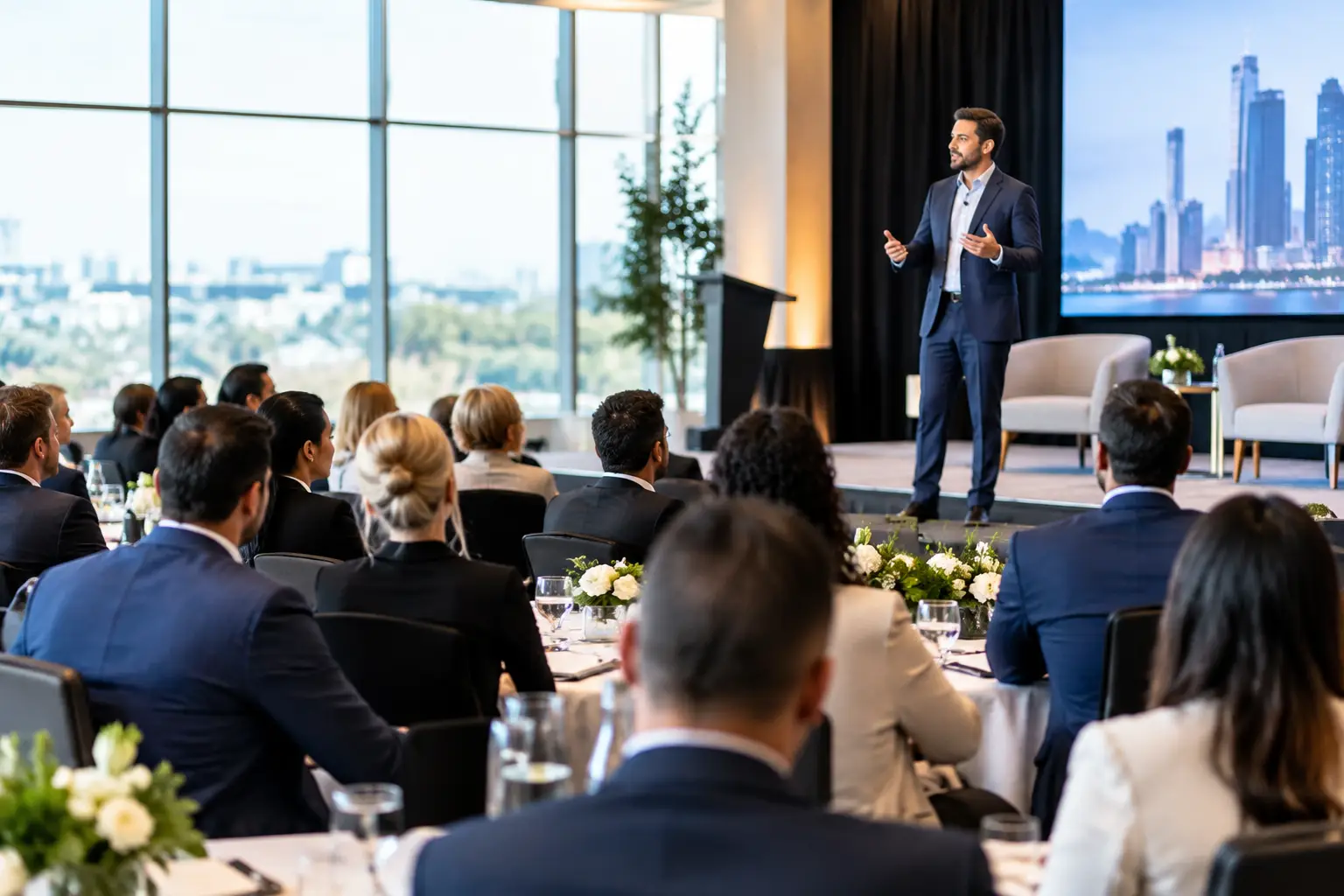
A conference that needs to generate qualified conversations should not be planned like a staff celebration. Yet many events underperform because the format is chosen by habit, not by the outcome it needs to deliver. The best corporate event formats start with a clear business purpose, then balance audience expectations, budget, location and the practical demands of delivery.
For busy internal teams, that decision affects far more than the agenda. It determines the venue brief, room layout, accommodation requirement, catering schedule, technology specification and supplier mix. Choose well, and the event feels purposeful and controlled. Choose poorly, and even a strong venue can struggle to compensate.
Start with the behaviour you want from attendees. Do you need them to learn, make decisions, celebrate, build relationships or contribute ideas? A large presentation-led format may be right for a company-wide announcement, while a smaller facilitated session will produce better results when leaders need honest discussion.
Audience size matters, but it should not make the decision alone. A 200-person sales meeting can still include workshops and peer learning if the agenda is designed in groups. Equally, a 30-person leadership event may need a formal conference setup when the goal is alignment around a serious strategic change.
Before sourcing venues, agree these five points with stakeholders: the primary outcome, expected delegate numbers, event duration, budget range and non-negotiables. Non-negotiables might include rail access, bedrooms on site, full accessibility, secure Wi-Fi, a gala dinner space or room for vehicle displays. This gives venue sourcing a sharper brief and prevents time being lost on attractive but unsuitable options.
A conference remains one of the most effective formats for communicating a major message to a broad audience. It works particularly well for annual meetings, industry updates, product education and thought leadership. The core programme usually combines keynote sessions, panels, breakouts and networking periods.
The risk is passive attendance. Long presentation blocks can reduce energy quickly, especially in a full-day programme. Build in discussion, live polling, focused breakout content and enough time between sessions for meaningful conversations. For multi-day conferences, accommodation and evening hospitality can turn a one-off meeting into a stronger relationship-building opportunity.
Leadership off-sites provide dedicated space for senior teams to focus on priorities away from daily interruptions. They are suited to annual planning, organisational change, strategy development and cross-functional alignment.
Privacy, comfort and the right pace matter more than scale. A discreet venue with natural light, flexible meeting space and quality accommodation will usually serve the group better than a large conference hotel built for hundreds of delegates. Allow time for informal conversation as well as formal sessions. Some of the most valuable decisions happen after the workshop ends, not during a slide presentation.
If the aim is to create ideas, agree actions or develop skills, workshops are often the strongest choice. They place delegates in an active role through facilitated discussion, working groups, demonstrations and exercises.
A workshop format needs a disciplined agenda. Too much content leaves no room for participation, while an open discussion without clear facilitation can lose focus. Choose a room with movable furniture, writable surfaces and reliable presentation technology. Cabaret or classroom layouts may work for learning, but round tables and breakout areas are often better when collaboration is the priority.
Town halls bring a large internal audience together around leadership updates, culture, performance or significant change. They can be held in person, online or as a hybrid event, depending on where employees are based.
Credibility depends on two-way communication. A senior leadership presentation is useful, but staff also need a practical route to ask questions. Anonymous question tools, a moderated Q&A and follow-up communications help make the event feel open rather than purely broadcast. For hybrid town halls, invest in professional audio and camera coverage. Remote attendees should be able to hear, see and contribute without feeling like an afterthought.
An awards dinner is a powerful way to recognise performance, reinforce values and create a shared sense of pride. It suits sales teams, partner networks, employee recognition programmes and annual celebrations.
The event succeeds through pacing. Keep formal speeches concise, make the awards presentation the centrepiece and plan the transition into entertainment carefully. Venue selection should consider ceiling height, stage sightlines, access for production, dining capacity and late licence requirements. If guests are travelling, nearby or on-site accommodation also reduces the logistical pressure at the end of the evening.
Team-building works best when it has a genuine connection to the people attending. A high-energy activity may suit a young sales team, while a mixed-age or cross-functional group may prefer a collaborative challenge, cookery activity or volunteering project.
Avoid treating team-building as a compulsory break from work with no purpose. Set a clear intention, whether that is building trust, welcoming new joiners or improving communication between departments. Accessibility, physical requirements and individual comfort levels must be considered early. Inclusive participation will achieve more than an activity that only engages the most confident people in the room.
A product launch needs focus. Whether the audience is customers, media, partners or internal sales teams, the event should make the product easy to understand and memorable to experience.
Demonstration space, lighting, branding opportunities and guest flow are central to the venue brief. A theatre may suit a reveal, while an industrial or gallery-style space can create a more immersive environment. Build rehearsal time into the schedule, particularly where there are live demonstrations, senior speakers or a tightly timed reveal. A launch has little room for uncertainty once the doors open.
Networking formats are useful when the value lies in introductions rather than formal content. They can range from a breakfast briefing to an evening reception, hosted dinner or speed-networking session.
The venue should encourage movement and conversation. Oversized rooms can feel empty, while loud bars can make discussion difficult. Consider arrival flow, registration, coat storage and the placement of food and drink stations, as these details influence how naturally guests interact. A short opening welcome can set the tone, but avoid over-programming an event designed for conversation.
Roadshows bring a consistent message to delegates in several locations. They are especially effective for employee engagement, training, customer updates and product demonstrations where asking every attendee to travel to one central venue is impractical.
Consistency is the challenge. Each venue should support a similar delegate journey, technical setup and catering standard, but local constraints will vary. Centralised planning, a detailed event specification and one point of contact across suppliers help protect the experience and budget. Build realistic time between dates for freight, crew travel, venue resets and contingency.
Summer parties, Christmas parties and milestone celebrations create an opportunity for colleagues to connect beyond their normal roles. They are valuable for culture, but they still need the same operational care as any business event.
Choose the style around the guest profile and desired atmosphere. A formal dinner can feel special, while a festival-style event may suit a larger, more relaxed workforce. Transport, dietary requirements, weather contingency, security and responsible alcohol planning should be addressed from the outset. The strongest celebrations feel effortless to guests because the detail has been managed properly behind the scenes.
The format should shape the venue search, not follow it. A venue may have an impressive ballroom, but that does not make it the right setting for an interactive leadership workshop. Similarly, an unusual event space may create impact for a launch but add cost and complexity through additional production, furniture hire or catering requirements.
This is where an experienced venue-finding partner can save substantial internal time. International Events can turn a clear brief into a considered venue proposal within 12 working hours, coordinating suitable options, hotel requirements and supplier needs through a single point of contact. That allows your team to concentrate on content and stakeholders while retaining control over costs and delivery.
The right format is not necessarily the newest or most elaborate one. It is the one that gives your audience a reason to engage, gives your business a measurable outcome and gives your planning team confidence that every practical detail has been accounted for.
Choose the best corporate event formats for your objectives, budget and audience, with practical planning advice to keep delivery polished and on track.
Read more
See a delegate booking consolidation example that cuts admin, controls hotel costs and gives your event team one clear point of contact from start to finish.
Read more
Know when to use corporate room blocks to reduce accommodation costs, protect attendance and simplify hotel coordination for business events at scale.
Read more
Copyright International Events Incorporated.
All rights reserved
Copyright International Events Incorporated.
All rights reserved

Fill in the following details. We respect your privacy, we don’t spam.
Fill in the following details. We respect your privacy, we don’t spam.  Or call us on 07715 242282
Fill in the following details. We respect your privacy, we don’t spam. Or call us on 07715 242282


 Enquire now


