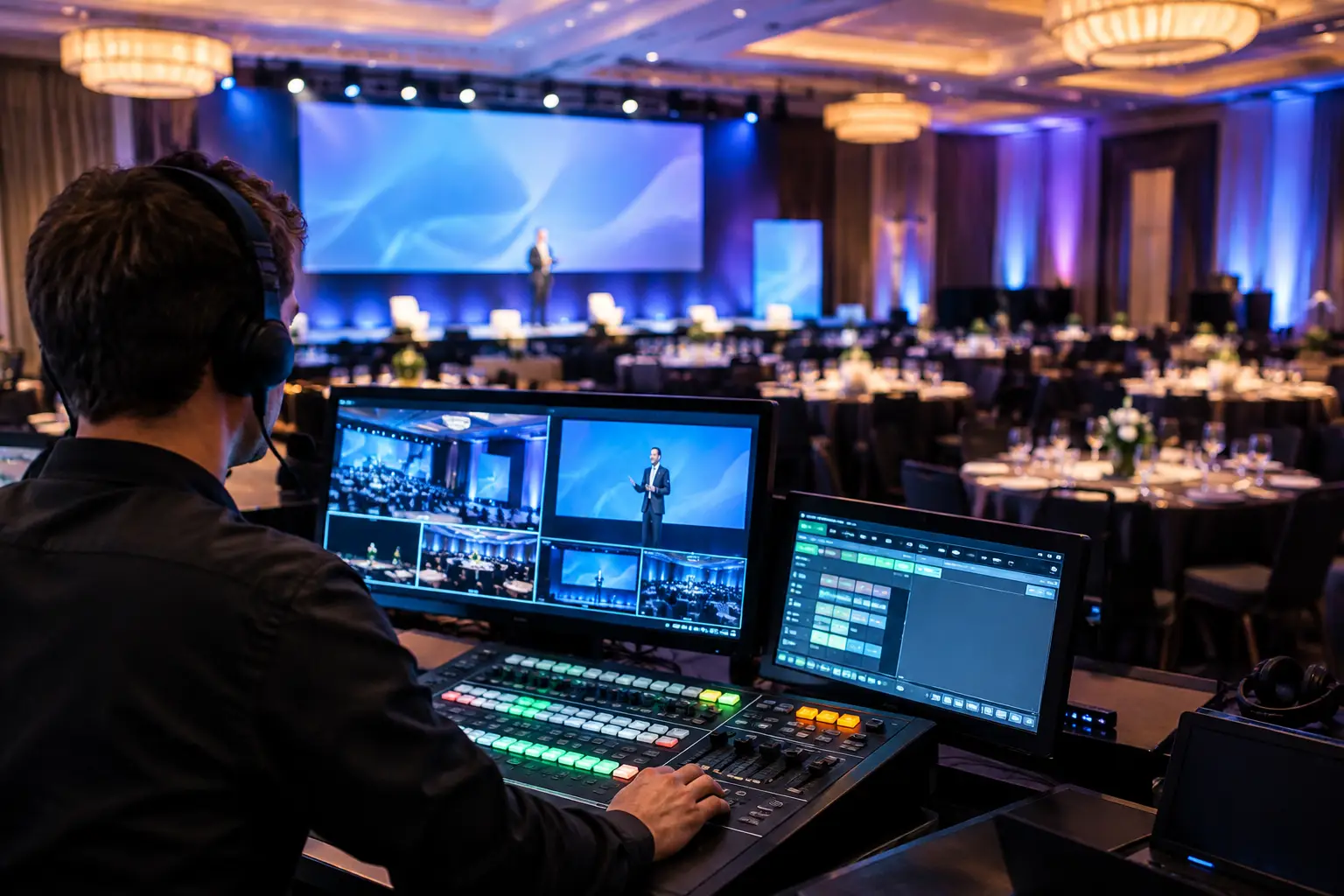
A conference can look effortless to delegates while relying on hundreds of decisions behind the scenes. Event production technology is what gives corporate teams visibility over those decisions: who is arriving, what is on screen, which supplier owns the next task, and whether the budget is still where it should be.
For a business event, technology should not be added because it is new or impressive. It should make the event easier to manage, more useful for attendees and less exposed to avoidable risk. The right approach creates control without making the experience feel over-engineered.
Corporate events have different priorities from consumer festivals or public exhibitions. Delegates expect a professional registration process, clear communication, reliable content and a programme that respects their time. Internal stakeholders need accurate costs, dependable reporting and confidence that suppliers are working from the same plan.
The best event production technology supports both sides. It reduces manual administration before the event, gives production teams a clear operational picture during it, and provides evidence of engagement afterwards. That may mean a registration platform, an event app, audience polling, badge printing, digital signage, a show-calling system or a virtual attendance option. It does not necessarily mean using all of them.
Every additional platform introduces another login, data flow and potential point of failure. The aim is not the longest technology checklist. It is a well-connected set of tools that solves genuine planning and delivery problems.
Before choosing a platform or approving production equipment, establish what success looks like. A leadership conference may need high-quality filming and secure streamed access for remote colleagues. An awards dinner may benefit more from timed content, confident show calling, room lighting and fast guest check-in. A sales conference may need session tracking, networking tools and live feedback.
This early conversation prevents a common problem: selecting a platform with extensive features that no one has the capacity to configure or promote. A feature only delivers value if delegates understand it, use it and receive something useful in return.
It also helps to decide where technology should remain invisible. Registration should be quick. Wayfinding should be obvious. Presentation switching should feel immediate. When systems work properly, delegates notice the event, not the processes supporting it.
The most effective production brief covers the audience, venue, content and operational constraints together. Consider how many delegates are attending in person and remotely; whether sessions are confidential; how much agenda change is likely; what data needs to be captured; and which teams require access to reports.
Venue infrastructure deserves equal attention. Wi-Fi capacity, mobile signal, ceiling height, rigging points, power availability, loading access and control-room position can all affect the proposed production. A venue may be visually right for the event but require additional equipment or labour to support a complex format. Identifying that early protects both budget and timetable.
Registration technology is often the first delegate interaction. It should collect the information needed to deliver a safe, relevant experience without creating an unnecessarily long form. Dietary requirements, accessibility needs, accommodation requests and session preferences can be captured early, then shared with the appropriate delivery teams through a controlled process.
Automated emails can reduce repetitive administration, but they still need careful ownership. Confirmation messages, joining instructions, QR codes, travel details and last-minute updates must be accurate and consistent with the event brand. The platform should make it easy to segment communications, for example by attendee type, day of attendance or chosen breakout session.
For larger events, a central project plan and supplier schedule are equally valuable. These do not need to be complicated systems. What matters is that deadlines, dependencies and responsibilities are visible. If the client team, venue, AV supplier and accommodation provider work from different versions of the plan, small changes become expensive very quickly.
On the day, event production technology becomes an operational tool. Self-service check-in and on-demand badge printing can reduce queues, particularly where delegate details change close to the event. However, staffed support remains essential. Technology should speed up the process, not leave a senior guest searching for help at the entrance.
In the event space, screens, microphones, lighting, playback, confidence monitors and presentation control need to operate as one production environment. A detailed running order should show exactly when content plays, which speaker is on stage, what appears on each screen and who has authority to make changes. This is where experienced show calling makes a substantial difference.
Live polling and Q&A tools can be particularly effective for business audiences. They give quieter delegates a route into the conversation and provide instant insight for speakers. They work best when questions are planned into the agenda rather than added as a last-minute extra. If the facilitator does not refer to the results, delegates have little reason to participate.
Digital signage can improve navigation and communicate programme changes, especially across multi-room conferences. Yet printed signage may still be the stronger choice for a small event, a venue with unreliable connectivity or a programme that is unlikely to change. The decision should be practical, not fashionable.
The value of technology should continue after the final session. Attendance data can show who registered, who attended and which sessions attracted the strongest interest. Feedback tools can identify whether the venue, content, catering and logistics met expectations. For internal events, this information can help demonstrate engagement and guide future investment.
Numbers need context. A high app download rate is not necessarily proof of success if delegates did not return to the app after opening it. Equally, low polling participation may reflect an agenda that was too tightly timed rather than a poor choice of platform. Reviewing results alongside feedback from delegates, speakers and the production team provides a more useful picture.
The most polished event platforms can still create problems when data ownership is unclear. Before committing to any technology, confirm where delegate information is stored, who can access it, how it is exported and how long it is retained. This is particularly important when handling employee data, senior attendees or sensitive conference content.
Integration also matters. A registration system that cannot share approved information with accommodation, badge printing or reporting processes may simply move administration elsewhere. Full integration is not always necessary, but manual workarounds should be identified and resourced rather than discovered during registration week.
Contingency planning is another non-negotiable. Internet connections fail, speakers arrive with incompatible presentation files and QR codes do not scan for every delegate. A professional production plan includes backups: local content copies, spare microphones, printed delegate lists, alternative check-in routes and a clear escalation process. The best contingency measures are rarely visible, but they protect the event when pressure is highest.
Technology can improve the perceived quality of an event, but it can also consume budget that would have a greater impact elsewhere. A premium event app may be difficult to justify for a single-day meeting with a straightforward agenda. Conversely, cutting audiovisual provision at a content-led conference can undermine every speaker and leave remote delegates excluded.
Prioritise the elements that directly support the event objective. Spend where it improves clarity, participation, accessibility or reliability. Be realistic about set-up time, technician requirements, licensing fees and venue restrictions. A lower initial quote is not always the lower overall cost once labour, connectivity and last-minute amendments are included.
This is where having one coordinated production and venue plan is valuable. Technology decisions affect room layout, power, catering schedules, speaker management, delegate flow and accommodation communications. Treating them in isolation creates gaps. Managing them as part of one operational plan gives teams more control over costs and fewer surprises on site.
International Events supports corporate teams by coordinating the moving parts that sit around the technology, venue and delegate journey. With the right brief and the right suppliers in place, production becomes a dependable part of the event rather than another task for an already stretched internal team.
The most successful event technology is not the system with the most features. It is the solution that gives your delegates a better experience and gives your team confidence that every detail is being managed when it matters most.

See a delegate booking consolidation example that cuts admin, controls hotel costs and gives your event team one clear point of contact from start to finish.
Read more
Know when to use corporate room blocks to reduce accommodation costs, protect attendance and simplify hotel coordination for business events at scale.
Read more
Learn how to measure conference attendee engagement using practical metrics that improve content, venue decisions, delegate experience and event results.
Read more
Copyright International Events Incorporated.
All rights reserved
Copyright International Events Incorporated.
All rights reserved

Fill in the following details. We respect your privacy, we don’t spam.
Fill in the following details. We respect your privacy, we don’t spam.  Or call us on 07715 242282
Fill in the following details. We respect your privacy, we don’t spam. Or call us on 07715 242282


 Enquire now


