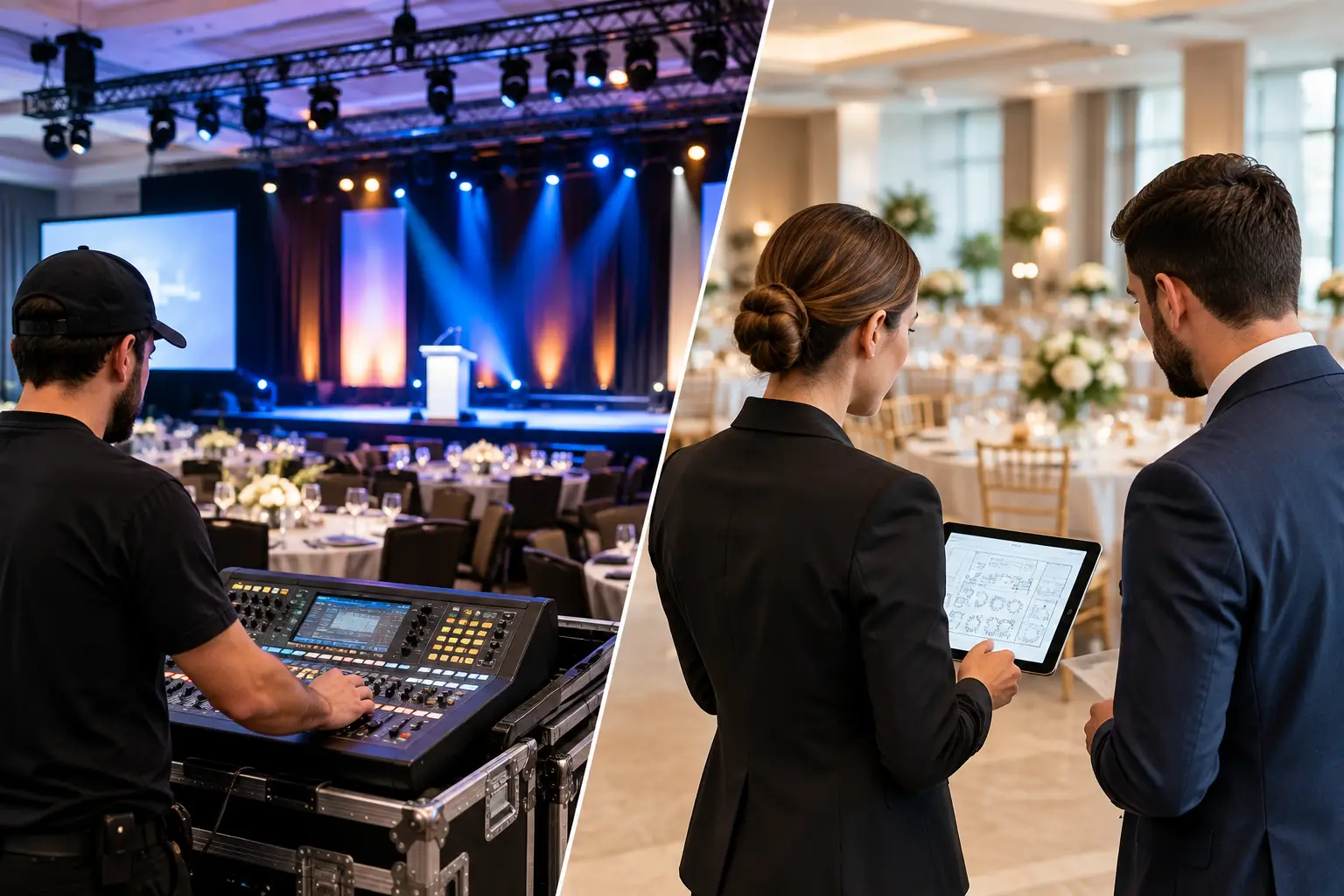
A venue may be confirmed, invitations sent and delegate numbers looking healthy, yet an event can still fail in the final hours. A screen is the wrong size, a speaker has no confidence monitor, transport arrives late, or nobody owns the decision when the running order changes. That is where understanding event production versus event management becomes commercially valuable, not just a matter of job titles.
For corporate teams, the distinction helps determine where specialist support will have the greatest impact. Event management provides the structure, coordination and control that keep a project moving. Event production turns the event experience into a polished reality, covering the technical, visual and operational details guests see and feel on the day. Many events need both, but not always to the same degree.
Event management is the planning and coordination of the event from brief to post-event follow-up. It is concerned with the whole project: objectives, budgets, venues, suppliers, delegate communications, schedules, accommodation, catering and contingency planning.
An event manager gives the project an owner. They establish the critical path, keep stakeholders informed, chase decisions before they become delays and make sure every supplier is working to the same brief. For a conference, this might include sourcing a venue with the right capacity and breakout space, managing registration, arranging bedrooms, confirming dietary requirements and building a practical agenda.
The work starts well before event day. A strong event management process protects budget and reduces internal administration by bringing enquiries, contracts, accommodation and supplier communication into one controlled plan. It also prevents a common corporate event problem: several internal teams making separate arrangements that do not quite connect.
The output of event management is an organised event operation. Guests may never see the work behind it, but they benefit from it. Registration feels straightforward, rooms are set correctly, timings hold, delegates know where to go and the client has clear visibility of costs and decisions.
That does not mean event managers never deal with production. They often coordinate production suppliers and include technical requirements in the venue brief. However, they may not be the specialists designing stage sets, programming lighting or calling every technical cue during a live show.
Event production focuses on how the event is delivered in the room. It covers the technical and creative infrastructure that supports presentations, entertainment, staging and guest experience. Depending on the event, production can include audiovisual equipment, lighting, sound, staging, set design, branding, video, live streaming, power, rigging and show calling.
For a leadership conference, production may mean ensuring every presenter is properly lit and heard, presentations appear correctly on screen and video content plays at the right moment. For an awards dinner, it may involve building an impactful stage, creating entrance music and lighting, managing walk-on cues and maintaining the pace that keeps the room engaged.
Production is often most visible when it is done badly. Poor sound, flat lighting, delayed playback or a crowded stage can undermine months of planning. Done well, it makes a corporate event feel considered, confident and aligned with the brand without distracting from the message.
The production team translates a creative or commercial brief into a live environment. They assess what the venue can support, identify technical limitations early and specify equipment and crew accordingly. On event day, they manage the details that cannot be left to chance, from microphone handovers and speaker rehearsals to countdowns, walk-on music and live content.
The scale of production should match the purpose of the event. A board meeting may need dependable presentation equipment and discreet technician support. A company-wide conference or awards ceremony may need a full technical design and rehearsed show flow. Overspending on production that does not serve the audience is as unhelpful as underinvesting where the experience carries real reputational weight.
The two disciplines are closely connected because production decisions affect the event plan. A venue with low ceilings may limit lighting and staging options. A theatre-style room set may affect sightlines and camera positions. A late agenda change may alter crew calls, catering breaks and guest movement.
This overlap is why handovers between separate suppliers need careful management. If the event manager assumes the production supplier has checked internet capacity, while the production supplier assumes it sits with the venue, a hybrid session can be put at risk. Clear ownership matters more than the labels used on a proposal.
The best working relationship is collaborative. Event management protects the wider plan, budget and stakeholder requirements. Event production protects the live delivery and audience experience. Both should work from the same event objectives, schedule and approved scope.
Start with the pressure points rather than choosing a service name. If your team is short on time, needs to find a suitable venue, manage delegate rooms or coordinate multiple suppliers, event management support is likely to deliver the strongest immediate value. It gives you a single point of contact and avoids internal teams spending days comparing venues, chasing availability and reconciling separate costs.
If the venue and logistics are already in place but the event includes senior presenters, brand content, entertainment or a live audience expectation, event production may be the priority. This is particularly true for conferences, product launches, awards dinners and town halls where the quality of the room directly shapes how the message is received.
For larger or high-profile events, separating the two can create unnecessary risk. A single partner coordinating venue, accommodation, logistics and production can identify issues earlier and make faster decisions when plans change. It also makes budget control more straightforward because the full event picture is visible in one place.
Consider whether the event needs more than a room and a running order. Will speakers require rehearsals? Are presentations, videos or remote contributors involved? Does the event need branded staging, specialist lighting or a live stream? Are delegates travelling from different locations and requiring accommodation? Will several suppliers need to work around one shared schedule?
The more yes answers you have, the more valuable joined-up management and production become. A modest event can still need professional support if the timeline is tight, senior stakeholders are involved or the cost of disruption is high.
Production should not be treated as an afterthought once a venue contract has been signed. The room itself determines much of what is possible and what it will cost. Ceiling height, access routes, loading times, built-in equipment, power supply, acoustics, blackout capability and Wi-Fi can all change the production plan.
A venue that looks right in photographs may be difficult to brand, unsuitable for a large screen or unable to accommodate an early technical build. Equally, a venue with an in-house audiovisual provider may offer convenience, but it is still worth checking whether the package meets the brief and budget.
This is where an experienced venue-finding and event partner adds practical value. International Events can assess venue options against the full operational brief, not simply capacity and location, then coordinate the moving parts once the right space is secured. That approach saves time at the outset and reduces unwelcome production costs later.
Even with a detailed plan, live events require decisions. A keynote overruns. A flight delay affects a speaker. A room change is needed. A video file needs replacing minutes before doors open. The question is not whether something will change, but who has authority to respond.
Agree a clear event-day structure before arrival. The client should know who leads the overall event, who controls the technical schedule, who communicates with the venue and who can approve additional spend. A shared running order, supplier contact list and escalation process give everyone the confidence to act quickly without creating confusion.
The strongest corporate events are rarely the ones with the most elaborate production. They are the ones where every detail supports the business objective, the right people are accountable and the client can focus on their guests rather than solving problems backstage. Begin with the outcome you need guests to remember, then put the management and production support behind it that will make that outcome dependable.

See a delegate booking consolidation example that cuts admin, controls hotel costs and gives your event team one clear point of contact from start to finish.
Read more
Know when to use corporate room blocks to reduce accommodation costs, protect attendance and simplify hotel coordination for business events at scale.
Read more
Learn how to measure conference attendee engagement using practical metrics that improve content, venue decisions, delegate experience and event results.
Read more
Copyright International Events Incorporated.
All rights reserved
Copyright International Events Incorporated.
All rights reserved

Fill in the following details. We respect your privacy, we don’t spam.
Fill in the following details. We respect your privacy, we don’t spam.  Or call us on 07715 242282
Fill in the following details. We respect your privacy, we don’t spam. Or call us on 07715 242282


 Enquire now


