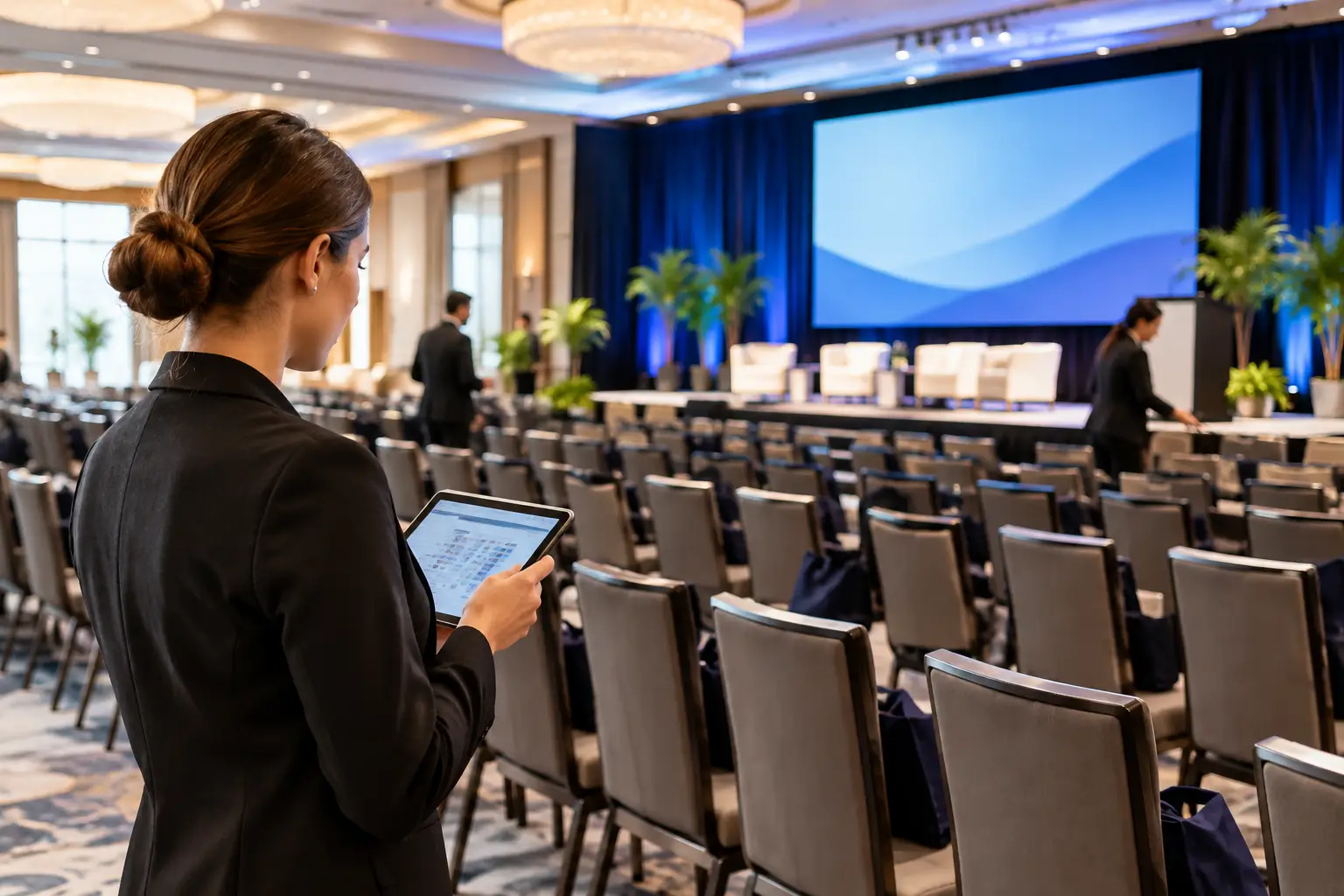
A conference can appear straightforward on an agenda: book a venue, invite delegates and deliver the content. Behind that agenda sits a chain of decisions that affect attendance, budget, brand perception and the working day of every person involved. The best examples of managed conference logistics show how those decisions are brought under one clear plan, with one accountable point of contact.
For corporate teams, the value is not simply having more hands on deck. It is having experienced support that spots dependencies early, coordinates suppliers properly and keeps the event moving when plans change. Here are seven practical examples of what managed logistics can look like in a business conference setting.
Venue sourcing is often treated as the first task on a conference checklist. In reality, it sets the conditions for almost everything that follows. A suitable venue needs the right capacity and location, but it must also support the event format: plenary sessions, breakouts, catering, accessibility, production, exhibition space and accommodation requirements.
Managed venue sourcing begins with a precise brief. That includes delegate numbers, preferred dates, budget parameters, travel patterns, room layouts, branding needs and any non-negotiables such as step-free access or secure Wi-Fi. The venue search then considers practical factors that are easily missed when time is tight, including loading access for production equipment, turnaround times between sessions and whether breakout rooms are close enough to encourage attendance.
For a leadership conference, for example, a city-centre hotel may look attractive on paper but create congestion at registration if the foyer is narrow and lifts are shared with other guests. A managed approach identifies those risks before contracts are signed, negotiates the right package and presents options that genuinely fit the brief. International Events can provide a detailed venue proposal within 12 working hours, helping internal teams move from an urgent requirement to a controlled decision quickly.
When delegates are travelling from multiple offices, accommodation is more than a rooming list. It affects arrival times, wellbeing, attendance at evening functions and the overall experience of the event.
A managed accommodation plan secures an appropriate allocation of rooms, agrees fair rates and cancellation terms, and establishes a clear booking process for delegates. It also accounts for different needs: executives may require flexibility around late changes, international guests may arrive a day early, and speakers may need rooms near the venue to protect their preparation time.
Consider a two-day sales conference with delegates arriving by rail, car and air. The logistics plan could place the main group in the conference hotel, reserve a nearby overflow property for late bookings and confirm clear directions between the station, hotel and venue. A named accommodation contact can handle substitutions and special requests, avoiding the familiar stream of individual hotel queries landing with an already busy marketing or HR team.
Registration is a delegate’s first live impression of the conference. A queue at 8.45am can undermine a polished agenda before the opening speaker has taken the stage. Good management means designing arrival for how people actually behave, rather than assuming everyone will arrive at the same time with a confirmation email ready.
This may involve pre-event joining instructions, staggered arrival windows, clearly branded registration points, alphabetised check-in and staff positioned to direct delegates immediately. For larger conferences, separate routes for speakers, VIPs, sponsors and general attendees can protect the main registration flow.
The detail matters. Badge spelling should be checked before print, dietary information should be available to catering teams, and a process should be in place for walk-ins or replacement delegates. If the event includes security screening, this needs to be included in arrival timings rather than added as an afterthought. Managed logistics turn registration from a potential bottleneck into a calm, professional welcome.
A conference agenda is only as reliable as the technical plan behind it. Microphones, presentation formats, lighting, confidence monitors, video playback, stage furniture and internet capacity all need to work together. The risk is not limited to a complete technical failure. A delayed slide change, an inaudible question from the floor or a slow reset between sessions can reduce energy and distract from the message.
A managed production schedule defines who is supplying each element, when equipment arrives, when it is tested and who has authority to make decisions on site. Speakers are briefed on slide deadlines and presentation formats. A technical rehearsal confirms transitions, walk-on music, video cues and microphone requirements before the room fills.
This is particularly valuable for conferences combining keynote content with panel discussions and workshops. The production team can prepare the next room while a session is still underway, then reset furniture, signage and equipment during scheduled breaks. The result is a programme that feels organised rather than rushed.
Catering is a logistical issue as much as a hospitality decision. Service must fit the agenda, room layout and delegate movement. If coffee is served too far from the breakout spaces, people return late. If lunch is under-catered, queues extend into the next session. If dietary requirements are not correctly communicated, the organiser faces an avoidable service failure.
Managed conference logistics include confirming delegate numbers at agreed points, providing accurate dietary data, planning food stations to reduce queues and agreeing service timings with the venue. It can also mean choosing the right format. A plated lunch may suit a senior leadership meeting where networking at tables is useful, while a larger conference may need food stations across more than one area to protect the timetable.
For an evening dinner after a full conference day, logistics extend to table plans, stage timings, bar arrangements and guest movement. Catering should complement the purpose of the event, not create pressure on the schedule or the budget.
A conference often involves people who are working to different priorities. Speakers want clarity on timings and technical requirements. Sponsors want agreed visibility and access to delegates. Venues need final numbers. Production suppliers need a confirmed running order. Without a central process, the organiser becomes the relay point for every question.
Managed logistics establish a single source of truth: a detailed event schedule, contact list, floorplan and supplier brief. Each party understands their arrival time, responsibilities and escalation route. Changes are communicated once, accurately, rather than being passed through a chain of emails.
A sponsor exhibition area is a useful example. The logistics plan covers stand locations, power, deliveries, set-up access, lead collection arrangements and dismantling times. It also confirms how sponsors are acknowledged within the wider programme. This protects commercial commitments while ensuring sponsor activity does not disrupt delegate flow.
No conference team can prevent every disruption. Trains are delayed, a speaker may be unwell, a venue room can become unavailable or delegate numbers can rise unexpectedly. The difference between a manageable issue and a visible crisis is preparation.
A practical contingency plan identifies likely risks and assigns actions in advance. There may be spare microphones, a backup version of every presentation, an alternative room layout, reserve signage and an agreed process for communicating urgent updates. For hybrid elements, a rehearsal and backup connection are essential, particularly where a remote speaker is central to the agenda.
Contingency planning should be proportionate. A 30-person internal meeting does not require the same level of operational cover as a 500-delegate annual conference. However, every event benefits from a clear on-site lead who can make decisions, coordinate suppliers and keep stakeholders informed without escalating avoidable problems to senior staff.
Effective conference logistics are connected. A venue choice affects accommodation, registration, production and catering. The delegate list affects room capacity, dietary planning and badge production. A late agenda change can alter AV cues, signage, staffing and transport. Managing each item separately may feel efficient at first, but it often creates gaps between suppliers and unnecessary work for the internal organiser.
A dedicated event partner brings those moving parts together. They can challenge assumptions early, negotiate with suppliers, maintain the event schedule and provide practical support on site. This creates better control over spend as well as delivery. It also gives marketing managers, executive assistants and event teams more time to focus on content, stakeholders and the business outcome the conference is designed to achieve.
When planning your next conference, start with the moments most likely to create pressure: the venue decision, delegate travel, supplier handovers and the live schedule. Put ownership around those moments early, and the event will be far easier to manage when the day arrives.

See a delegate booking consolidation example that cuts admin, controls hotel costs and gives your event team one clear point of contact from start to finish.
Read more
Know when to use corporate room blocks to reduce accommodation costs, protect attendance and simplify hotel coordination for business events at scale.
Read more
Learn how to measure conference attendee engagement using practical metrics that improve content, venue decisions, delegate experience and event results.
Read more
Copyright International Events Incorporated.
All rights reserved
Copyright International Events Incorporated.
All rights reserved

Fill in the following details. We respect your privacy, we don’t spam.
Fill in the following details. We respect your privacy, we don’t spam.  Or call us on 07715 242282
Fill in the following details. We respect your privacy, we don’t spam. Or call us on 07715 242282


 Enquire now


