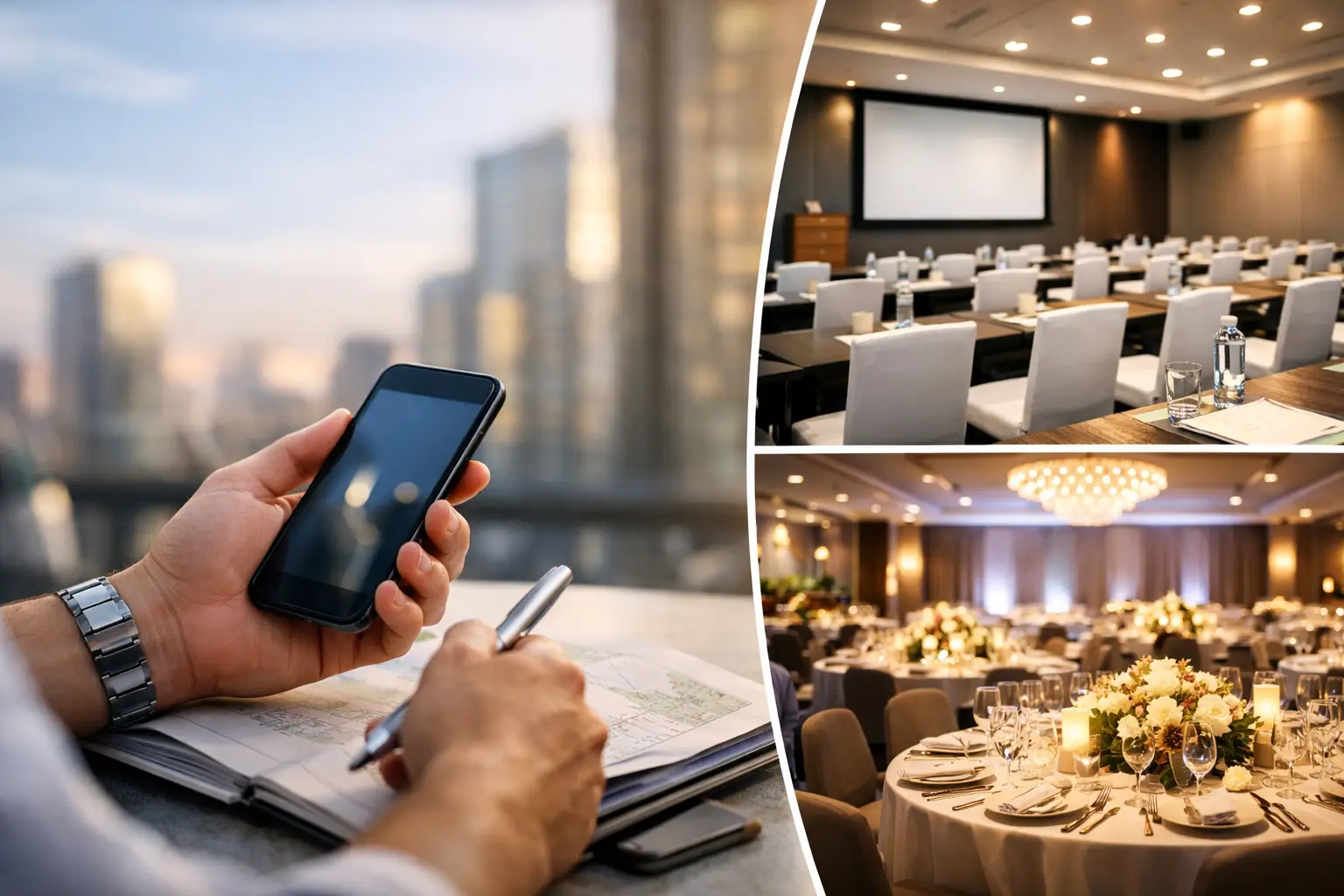
At 4.30pm on a Tuesday, an internal communications team learns that its booked conference venue can no longer host a 280-person leadership meeting due to take place that Friday. This last minute venue sourcing example shows what a controlled response looks like when the deadline is fixed, senior delegates are travelling from across the UK, and cancellation is not an option.
The priority is not simply finding a room with enough chairs. It is securing a venue that protects the event experience, meets the budget, works for delegate travel and can be contracted without introducing new risk. With the right process, a short timeframe does not have to mean a poor decision.
The client needed a central UK location for a full-day conference, followed by an evening dinner and overnight accommodation for 180 delegates. The event required a theatre-style plenary room, three breakout spaces, reliable AV, accessible facilities and enough time for branding and registration set-up before delegates arrived.
The original budget had been agreed, so there was limited room for a premium created by the late booking. The team also needed a single point of contact. They could not spend the next two days chasing venue sales teams, comparing different package formats and managing hotel rooming lists while continuing their day jobs.
A fast sourcing exercise starts by separating non-negotiables from preferences. In this case, capacity, availability, overnight rooms, travel access and the overall budget ceiling were essential. A particular city location and a preferred dinner format were flexible if changing them created better availability or value.
That distinction matters. If every preference is treated as essential, the available options narrow quickly. If the brief is too loose, the client receives proposals that look attractive on paper but do not support the event’s purpose.
Once the brief was confirmed, the sourcing team approached suitable venues immediately. This was not a broad request sent to every hotel and conference centre in the region. It was a targeted enquiry to venues with the right capacity, operational capability and realistic likelihood of releasing space at short notice.
Each enquiry covered the event timings, room layouts, catering requirements, bedroom numbers, production needs and decision deadline. Providing this information early helps venues respond accurately. It also shows that the enquiry is serious, which can be particularly valuable when a venue has only one remaining space or is managing several competing requests.
By the following morning, the client received a concise proposal comparing three viable options. Each option included meeting-space hire, day delegate rates, bedrooms, dinner arrangements, key concessions, cancellation terms and estimated total costs. The comparison also highlighted practical differences, such as whether the venue could offer early access for production or whether bedrooms were held on a named or individual basis.
International Events aims to provide a detailed venue proposal within 12 working hours because speed only helps when the information is decision-ready. A list of possible venues creates more work. A considered shortlist gives stakeholders a route to approval.
Late availability can work in a client’s favour, but it depends on the venue’s trading position. A hotel with unsold bedrooms close to the date may be open to a stronger package. A venue hosting a major city-wide event may have little reason to move on price. The best outcome comes from understanding the supplier’s position and negotiating the complete package rather than focusing only on the headline day delegate rate.
For this event, the preferred venue could accommodate the group but initially quoted a bedroom rate above budget and required a separate room-hire fee for the dinner. The negotiation focused on the value of taking meeting space, bedrooms, catering and the evening function under one contract.
The final agreement removed the dinner room-hire charge, included basic staging and screen hire, and reduced the bedroom rate for the contracted block. The venue also agreed a later deadline for unused bedroom release, giving the client more time to confirm attendees without carrying unnecessary financial exposure.
These details can have a meaningful effect on the final spend. A cheaper venue is not necessarily the best-value venue if AV, Wi-Fi, early access, porterage or evening space are added later at higher rates. A proper comparison should show the likely total, not just the attractive first number.
With less than 48 hours to secure the event, there was no time for a traditional site visit. That did not remove the need for due diligence. Instead, the venue was checked through a focused operational review.
The team confirmed the exact dimensions and capacity of each room for the planned layouts, the route from reception to the conference suite, lift access for equipment, loading arrangements, Wi-Fi provision and the venue’s on-site event contact. Floorplans, current images and a video walk-through helped confirm that branding, registration and delegate flow would work as intended.
The contract also received close attention. Short lead times can create pressure to sign quickly, but the client still needed clarity on payment timings, cancellation exposure, attrition on bedrooms, minimum catering commitments and what happened if the venue failed to deliver a contracted service. A venue can be available and still be unsuitable if the commercial terms create disproportionate risk.
The client selected the preferred option by midday on Wednesday. The contract was agreed that afternoon, allowing the event team to shift from venue research to delivery.
From that point, coordination became just as important as sourcing. The venue received the final agenda, rooming requirements, dietary information, branding schedule and AV specification. Delegates received clear joining instructions, including rail access, parking details, check-in arrangements and the location of the evening dinner.
The hotel rooming list was managed against the agreed cut-off date, with changes tracked carefully. This avoided the common last-minute problem of departments booking rooms independently, creating duplicate reservations or missing the negotiated rate. The production supplier was briefed on access times and loading instructions, while the venue’s operations team had a final event order covering every space, service time and key contact.
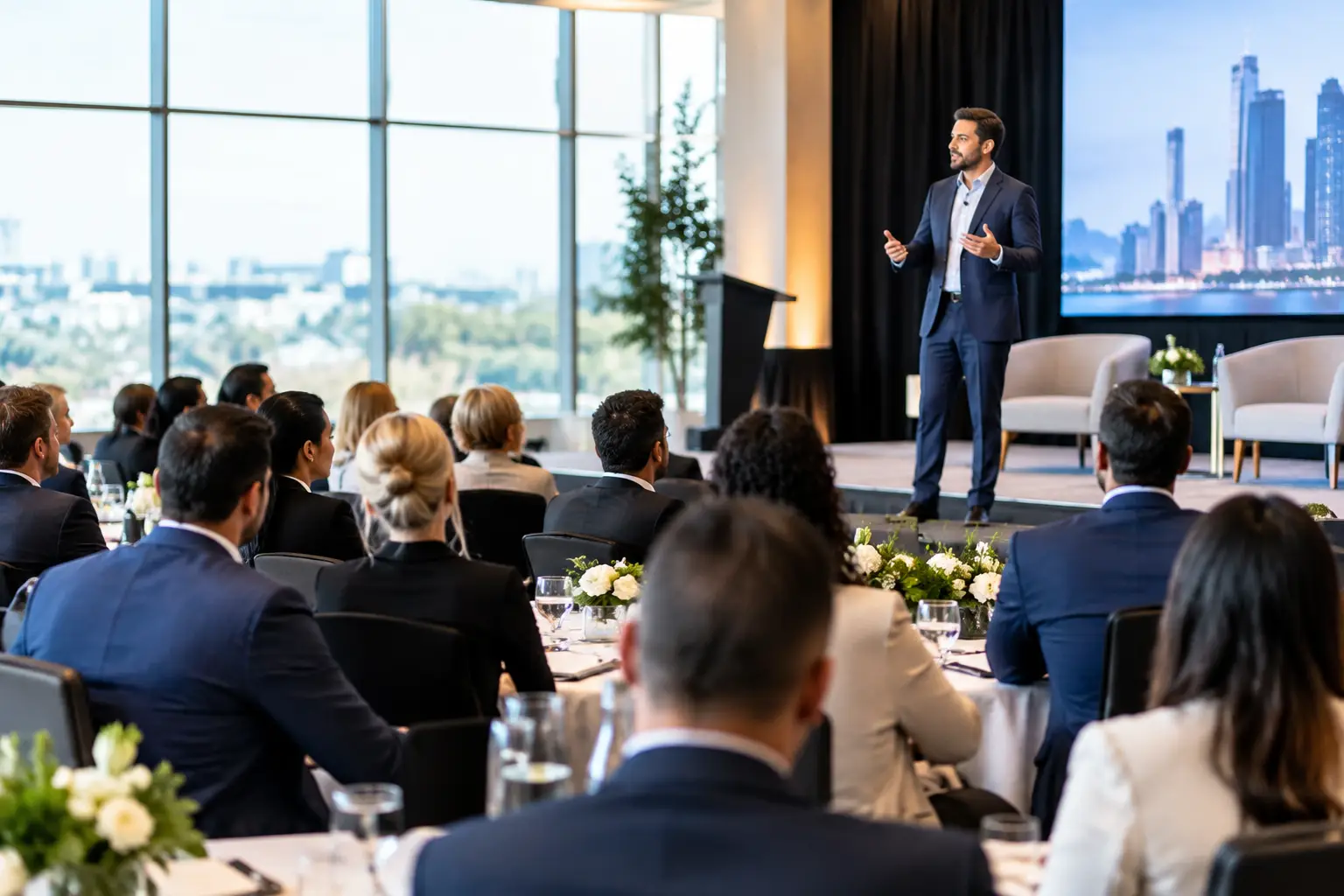
The conference went ahead on Friday with the planned plenary sessions, breakouts and dinner. Delegates were unlikely to know that the original venue had fallen through three days earlier. That is the point of effective event support: the internal team should be able to focus on their audience and business message rather than the operational rescue behind the scenes.
A last-minute event does involve compromise sometimes. The first-choice postcode may not be available, delegates may need to travel a little further, or the dinner format may need to change to suit the space. The aim is not to pretend those trade-offs do not exist. It is to make them visible early, measure their impact and protect the elements that matter most.
Corporate teams gain the most control when they can give a venue-finding partner a decisive brief, a clear approval process and one person authorised to make timely decisions. In return, they should expect a shortlist that is commercially sound, operationally checked and ready to move forward.
When a venue problem lands unexpectedly, act quickly but do not rush blindly. A focused brief, informed negotiation and disciplined coordination can turn a difficult deadline into an event that still feels planned, professional and fully on brand.
Choose the best corporate event formats for your objectives, budget and audience, with practical planning advice to keep delivery polished and on track.
Read more
See a delegate booking consolidation example that cuts admin, controls hotel costs and gives your event team one clear point of contact from start to finish.
Read more
Know when to use corporate room blocks to reduce accommodation costs, protect attendance and simplify hotel coordination for business events at scale.
Read more
Copyright International Events Incorporated.
All rights reserved
Copyright International Events Incorporated.
All rights reserved

Fill in the following details. We respect your privacy, we don’t spam.
Fill in the following details. We respect your privacy, we don’t spam.  Or call us on 07715 242282
Fill in the following details. We respect your privacy, we don’t spam. Or call us on 07715 242282


 Enquire now


