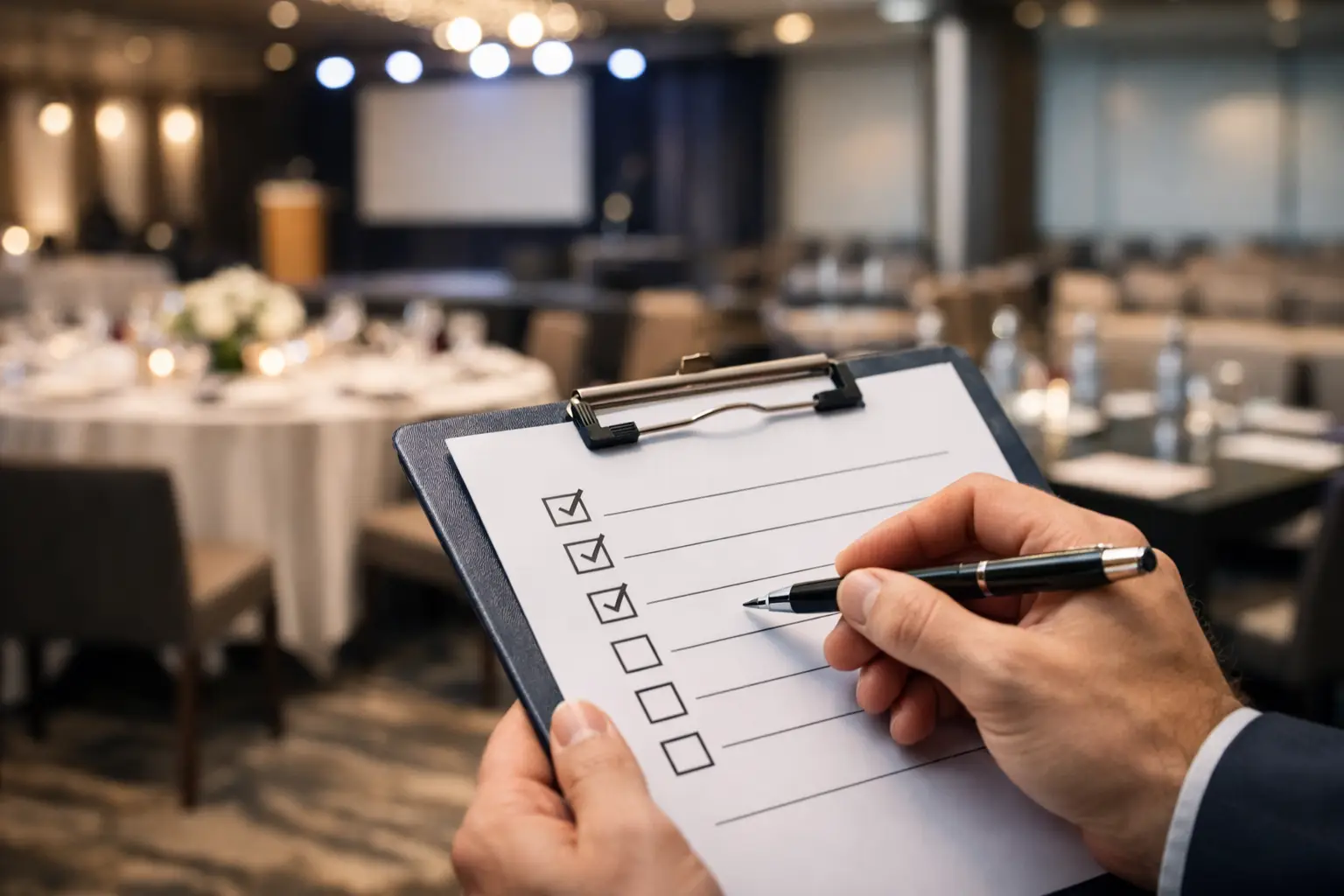
A venue can look perfect at first glance, then create problems the moment your agenda, delegate numbers and budget come under pressure. That is why a clear venue booking checklist matters. For corporate events, the right space does more than hold people – it supports timings, protects your budget, reflects your brand and reduces the operational strain on your team.
Too often, venue selection starts with location and price, then ends with compromises on layout, catering, accommodation or technical delivery. A better approach is to assess each option against the practical demands of the event from the start. That gives you a stronger shortlist, cleaner comparisons and fewer surprises once contracts are signed.
A useful venue booking checklist is not just a list of nice-to-haves. It should help you decide whether a space can deliver your event properly, under real conditions, with your actual audience and schedule. That means looking beyond brochure images and headline day delegate rates.
For a conference, you may need strong access links, multiple breakout rooms, reliable AV and nearby hotel inventory. For an awards dinner, guest flow, ceiling height, production access and catering quality may carry more weight. For a summer party or Christmas event, the atmosphere may be important, but so are wet-weather plans, licensing and transport home.
The checklist should therefore be built around function first, then experience, then cost. If the venue cannot support the basics, no amount of styling will fix it.
Before comparing venues, define the essentials internally. This is where many delays begin. If stakeholders are unclear on guest numbers, event format or budget tolerance, the search becomes wider than it needs to be and decisions slow down.
Confirm your expected attendance, preferred dates, start and finish times, and whether flexibility exists. Establish the event purpose as well. A leadership summit, client conference and employee celebration may all need very different environments, even with similar numbers.
Budget should also be separated into venue hire and total event cost. A lower room hire can be misleading if the venue requires external furniture, extensive production, higher catering minimums or additional staffing. Equally, a more expensive venue may save money if it includes AV, furniture, staging elements or accommodation rates that reduce total spend.
Capacity is the obvious starting point, but it needs context. Ask for capacities by layout, not just a maximum figure. A venue that holds 300 standing may only suit 180 cabaret or 220 theatre style. If your event includes registration, catering stations, sponsor areas or product displays, usable space can shrink quickly.
Location should be assessed through the eyes of your delegates. Consider rail access, airport transfer times, parking, step-free entry and local hotel availability. A central postcode looks good on paper, but if travel is awkward for most attendees, punctuality and attendance can suffer.
Availability is not only about the event date. Check access windows for build and breakdown, especially if you have staging, branding or external suppliers. Some venues offer attractive rates but restrict access so tightly that set-up becomes rushed and labour costs increase.
Technology is another area where assumptions cause problems. Ask what AV is included, who operates it, whether there is on-site technical support and how reliable the internet is under load. Free Wi-Fi is not the same as event-grade connectivity. If delegates will be streaming, presenting or using event apps, bandwidth matters.
Catering deserves closer scrutiny than a sample menu. Confirm service timings, dietary provision, flexibility on package choices and whether the kitchen can cope with your numbers efficiently. For some events, speed of service is more important than menu range. For others, presentation and brand alignment matter more.
Accommodation can be critical for conferences and multi-day events. Check bedroom inventory, room rates, cut-off dates, cancellation terms and the distance between the venue and overflow hotels. If rooms are spread across several properties, transport planning may need to be built in.
Good venue sourcing is not only about finding a suitable space. It is about understanding the full financial picture before you commit. A polished proposal can still hide costs that only emerge later.
Ask for a complete breakdown of venue hire, food and beverage charges, staffing, security, cloakroom, corkage, power, cleaning, furniture, late licences and service charges. Clarify VAT treatment early so internal approvals are based on real figures rather than rough estimates.
Minimum spends need careful attention. They can work well if your catering and bar requirements comfortably meet them. They can also distort value if you end up increasing spend simply to satisfy a contract threshold.
Payment terms matter too. Review deposit schedules, interim payments and final balance deadlines. If your event is tied to internal procurement cycles, these timings can influence which venues are realistic options.
Cancellation and attrition clauses should never be treated as small print. If delegate numbers fall, travel changes or internal priorities shift, the financial impact can be significant. The best choice is not always the venue with the lowest headline price. It is often the one with terms that give your business more control.
A venue can meet the brief commercially and still create difficulties on the day. This is why site visits and operational questioning are so valuable.
Check the flow of the event from arrival to departure. Where will registration sit? Will guests queue in a public area? Is there enough space for networking without blocking access routes? If breakout sessions are planned, can delegates move between rooms quickly without causing delays?
Supplier access is another practical point. Ask about loading, lift sizes, rigging points, delivery times and storage. Venues with limited back-of-house space may require more careful scheduling for florists, production teams and exhibition contractors.
Health and safety processes should be straightforward and documented. Confirm fire procedures, first aid provision, security arrangements and any restrictions that could affect staging, entertainment or room dressing. Outdoor events need an especially clear weather contingency plan.
If brand presentation matters, review what can and cannot be customised. Some venues are highly flexible. Others limit signage, screen takeovers, room turns or external supplier use. These details can affect the guest experience more than expected.
The fastest way to shortlist well is to score venues against the same criteria. That keeps internal feedback focused and prevents decisions being driven by whoever saw the nicest event photos.
Create a comparison sheet that covers capacity, location, layout fit, technical capability, accommodation, catering, access times, contract flexibility and total estimated cost. Weight the factors according to the event. For a board meeting, privacy and service may rank highest. For a large conference, bedroom stock and logistics may lead.
This is also where expert venue finding can save considerable time. A specialist partner can challenge weak options early, negotiate more effectively and present only venues that genuinely match the brief. For busy internal teams, that removes hours of chasing proposals, clarifying costs and managing supplier back-and-forth. International Events, for example, structures the search around speed, fit and commercial control, which is exactly what most corporate planners need when deadlines are tight.
One common mistake is choosing on aesthetics before operations. A beautiful room with poor access, weak acoustics or limited breakout space can make delivery harder than it needs to be.
Another is underestimating final numbers. If your guest list is likely to grow, build in some headroom. A room that feels full at contracted numbers may become uncomfortable once sponsors, speakers and internal stakeholders are added.
It is also easy to overlook delegate experience between the main agenda moments. Long walks to toilets, slow coffee service, insufficient lifts or confusing wayfinding all shape how professional the event feels.
Finally, avoid treating venue contracts as standard paperwork. The commercial terms are part of the decision, not an afterthought.
The best venue is rarely the one that shouts loudest in a brochure. It is the one that supports your objectives, keeps delivery under control and gives your team confidence from first enquiry to final guest departure.

Choose the best conference hotels for delegates with a practical checklist covering location, bedrooms, meeting space, service, budget and booking control.
Read more
Compare the best delegate management platforms for corporate events, from registration and payments to reporting, integrations and hands-on support teams.
Read more
See a corporate event budget savings example showing how focused venue sourcing, hotel strategy and tighter supplier control can reduce your total spend.
Read more
Copyright International Events Incorporated.
All rights reserved
Copyright International Events Incorporated.
All rights reserved

Fill in the following details. We respect your privacy, we don’t spam.
Fill in the following details. We respect your privacy, we don’t spam.  Or call us on 07715 242282
Fill in the following details. We respect your privacy, we don’t spam. Or call us on 07715 242282


 Enquire now


