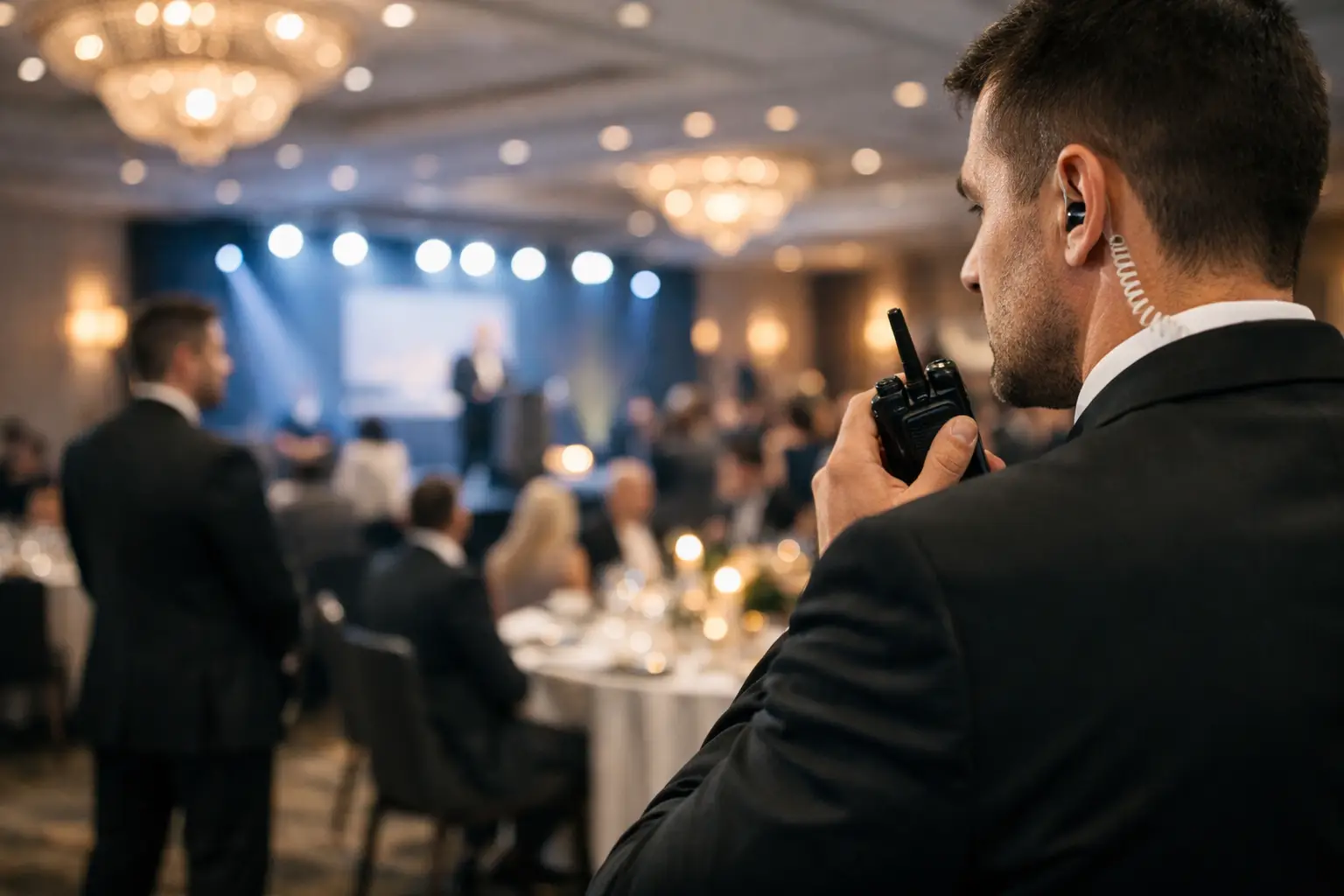
A polished corporate event can lose credibility in minutes if guests cannot enter efficiently, confidential information is exposed or an incident is handled inconsistently. Business event security is not simply about placing guards at the door. It is a practical plan for protecting people, assets, data and reputation while keeping the guest experience professional and welcoming.
For organisers, the challenge is getting the balance right. Security must be proportionate to the event, the venue and the audience. An executive conference with sensitive business updates needs a different approach from a staff summer party, while both still require clear ownership, controlled access and an agreed response should something go wrong.
The right venue makes security easier to manage. It should support your event requirements rather than creating extra pressure for your internal team. Before contracts are signed, establish how guests will arrive, register, move around the space and leave at the end of the event.
Ask practical questions about entrances, loading access, public areas and the separation of delegates from other venue users. A city-centre hotel may have excellent transport links but a shared lobby and multiple events taking place at once. A private venue may offer more control, but require additional staffing, transport planning or temporary infrastructure.
Venue due diligence should cover the building’s emergency procedures, evacuation routes, first-aid provision, CCTV coverage, overnight security and incident escalation process. If alcohol is being served, consider how the venue manages guest welfare, late departures and taxis. If you are bringing in staging, production equipment or valuable exhibition materials, confirm where deliveries are received and how items are secured before, during and after the event.
This is where an experienced venue sourcing partner adds value. Security requirements can be built into the initial brief, so suitable options are identified early rather than treated as a last-minute operational issue. International Events can coordinate venue, accommodation and supplier requirements through one point of contact, reducing the risk of security details being missed between multiple teams.
A generic risk assessment is rarely enough. Your security plan should reflect the nature of the event, who is attending and what could realistically disrupt it. The aim is not to predict every possible scenario. It is to identify the most likely and most serious risks, then agree sensible controls.
For a board meeting or product launch, the focus may be on restricted access, confidential materials, photography rules and discreet management of high-profile attendees. For a conference, crowd flow, registration queues, delegate badges and breakout room access may be the priorities. A large awards dinner may require closer attention to alcohol service, guest behaviour, valuables, transport and safe departure.
Consider the following areas as part of the planning discussion:
Not every event needs a visible security presence. In some cases, trained venue staff, a well-managed registration desk and clear procedures will be sufficient. Where attendance is high, the profile is sensitive or access needs tighter control, professional security personnel may be appropriate. The decision should be based on risk, not appearances.
Security fails when everyone assumes someone else is responsible. Name an event security lead who can make decisions on the day, liaise with the venue and contact the relevant people if an incident occurs. This may be an internal event manager, a venue duty manager or an external event management partner, depending on the scale of the event.
That person needs a concise event-day plan, not a lengthy document that remains unread. It should include key contacts, arrival times, access arrangements, room plans, emergency procedures, medical support, lost-property handling and escalation routes. They should also know who has authority to pause a session, close an entrance or make a decision affecting the running order.
Registration is one of the most effective security controls at a business event. It confirms who is expected, helps manage capacity and creates an accurate attendance record in an emergency. It also sets the tone. A calm, organised arrival experience reassures guests that the event is being handled professionally.
For smaller meetings, a printed guest list and name badges may be enough. Larger events may need pre-registration, QR codes, badge scanning or separate access categories for delegates, speakers, sponsors, suppliers and media. If badges are used, ensure staff know what to do if a guest has lost one, arrives unregistered or asks to bring an additional attendee.
Avoid relying on badges alone where restricted areas contain confidential material, expensive equipment or senior stakeholders. Use separate passes, staffed doors or controlled wristbands where appropriate. Back-of-house areas should be clearly separated from guest spaces, particularly during build and breakdown when the venue may be busy with contractors.
It is equally important to communicate photography, filming and social media rules. If a presentation contains commercially sensitive information, say so before the session begins and display clear signage. For events where guest privacy is a concern, create a simple process for identifying attendees who do not wish to be photographed.
Business event security includes digital and physical information. Delegate lists, dietary requirements, accommodation details and contact information must be handled appropriately. Only collect information you need, limit who can access it and avoid leaving printed lists or registration screens visible to passers-by.
Be particularly careful with rooming lists, VIP itineraries and speaker schedules. These documents often contain personal details and should not be circulated more widely than necessary. If event staff use shared devices or tablets at registration, make sure they are password protected and supervised.
Wi-Fi also deserves attention. Guests increasingly expect reliable connectivity, yet unsecured networks can create unnecessary risk. Confirm whether the venue offers a dedicated event network, what support is available and whether any internal presentations or demonstrations require a separate connection. For highly sensitive meetings, discuss digital requirements with your IT team well before the event.
A strong plan is only effective if the people delivering the event understand it. Security should be included in the final supplier briefing alongside timings, dress code, loading instructions and service standards.
Production crews need to know where equipment can be stored and who can access the control area. Caterers should understand guest numbers, allergy processes and what to do if someone becomes unwell. Hosts and registration staff need a clear script for handling unexpected guests without causing embarrassment. Security staff need to know the event schedule, VIP arrangements and the tone expected from them.
A short pre-event meeting can prevent confusion later. Walk through the venue, identify fire exits and assembly points, confirm radio or telephone communication, and agree how incidents will be reported. Make sure the team understands the difference between an issue they can resolve quietly and one that requires immediate escalation.
Most business events run without serious disruption. Preparation is still essential because the quality of the response matters as much as the issue itself. A guest injury, missing item, medical concern, aggressive behaviour or fire alarm can quickly affect the experience of hundreds of people if responsibilities are unclear.
Your response plan should be calm and practical. Know where first aid is located, who contacts emergency services, who meets responders on arrival and who communicates with delegates if a session is delayed or an area must be cleared. For larger events, prepare holding messages in advance so communications remain accurate and measured under pressure.
If alcohol is central to the event, build welfare measures into the schedule. Provide food and water, avoid excessively long drinking periods, ensure hosts know how to raise concerns and make safe travel options visible. The objective is not to restrict enjoyment. It is to protect guests and the organisation hosting them.
After the event, ask the venue, event team and key suppliers what worked and where procedures caused delay or confusion. Review registration data, incident logs, guest feedback and any security observations. Small improvements, such as clearer signage, a better loading plan or an additional registration position, can materially improve the next event.
A well-managed security plan should rarely become the focus of the day. Guests remember a smooth arrival, confident hosts, reliable information and an event that felt safe without feeling over-managed. That is the right outcome: protection built into the experience, leaving your team free to focus on the people and the purpose of the event.

Choose the best corporate event formats for your objectives, budget and audience, with practical planning advice to keep delivery polished and on track.
Read more
See a delegate booking consolidation example that cuts admin, controls hotel costs and gives your event team one clear point of contact from start to finish.
Read more
Know when to use corporate room blocks to reduce accommodation costs, protect attendance and simplify hotel coordination for business events at scale.
Read more
Copyright International Events Incorporated.
All rights reserved
Copyright International Events Incorporated.
All rights reserved

Fill in the following details. We respect your privacy, we don’t spam.
Fill in the following details. We respect your privacy, we don’t spam.  Or call us on 07715 242282
Fill in the following details. We respect your privacy, we don’t spam. Or call us on 07715 242282


 Enquire now


