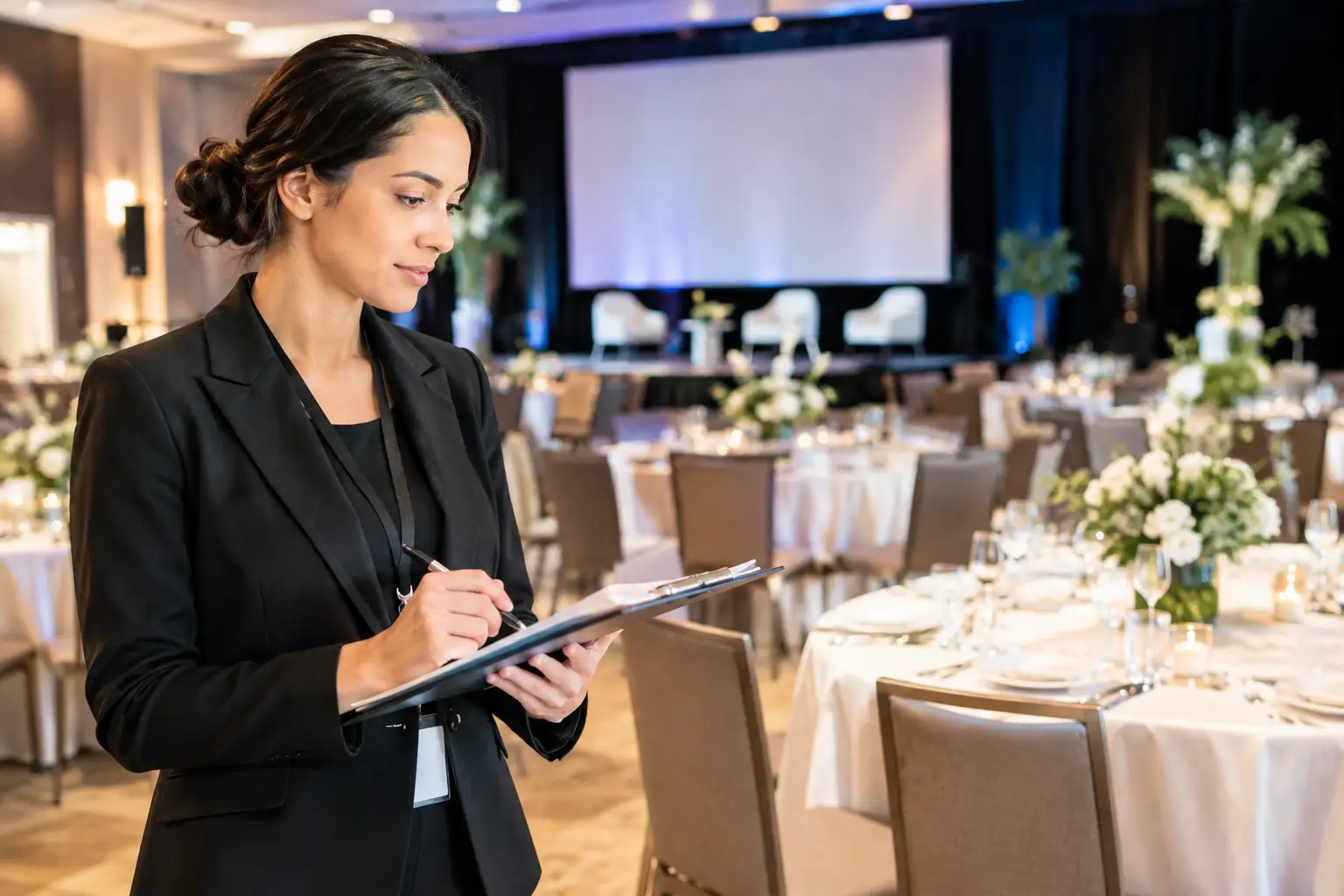
A conference can have an excellent venue, engaging speakers and a well-planned agenda, yet still feel disjointed if nobody knows precisely what should happen next. Creating event run sheets turns the plan into an operational document that gives your team, suppliers and stakeholders the same view of the day.
For corporate events, a run sheet is more than a timetable. It is the live control document for every moving part: delegate arrival, room access, audiovisual checks, speaker cues, catering service, award presentations, transport and close-down. When it is clear, current and properly owned, it reduces pressure on the internal team and helps the event remain on time, on brand and within budget.
A good run sheet answers three questions immediately: what is happening, when is it happening, and who is responsible? It should allow a colleague stepping in at short notice to understand the event flow without searching through email threads, venue contracts or separate supplier schedules.
The detail required depends on the event. A board dinner may need a concise schedule covering guest arrival, drinks, dinner service and speeches. A multi-day conference requires a far more detailed operational plan, including room turnaround times, breakout allocations, registration volumes, stage cues and contingency arrangements.
The aim is not to document every thought from the planning process. It is to provide the practical information needed to make decisions and take action on the day. Overloading the sheet can be as unhelpful as leaving key details out.
Begin with the elements that cannot move easily. These are usually venue access times, supplier load-in, registration opening, session start and finish times, meal service, keynote speeches, transport departures and the venue handover at the end of the event.
Confirm these timings directly with the people delivering them. A venue may allow access to the event space from 07:00, for example, but the AV supplier may need two hours to build and test the stage set-up before speakers arrive. Catering may need a defined window for lunch service, while a senior presenter may need to leave immediately after their session.
Once those fixed points are in place, build the agenda around them. Add realistic transition time between activities rather than assuming every session will finish and start at the exact minute shown to delegates. Five or ten minutes can protect the overall schedule when a speaker runs over, guests move slowly between rooms or a technical check takes longer than expected.
This is particularly important for awards dinners and large conferences. The most visible moments of the event often rely on activity happening out of sight, such as finalists being lined up, trophies being brought to stage, music being cued and catering being held until the presentation ends.
A run sheet only works when everyone is working from the latest version. Assign one person to own the document and establish a clear process for updating it. Changes to agenda timing, room names, speaker requirements or supplier arrival details should be captured promptly, not passed around informally on messages.
Include a version number, date and time at the top of the document. This small discipline prevents an outdated draft being printed or circulated to the wrong supplier. On a complex event, distribute a final version before the event and maintain a controlled live copy for the event management team.
For the main document, use clear columns that can be scanned quickly:
Keep language direct. “09:45 – Stage manager to cue walk-on music when host receives go-ahead from AV” is more useful than “Host introduction”. The first instruction tells the right person exactly what must happen and what the trigger is.
The strongest run sheets follow the experience of the people attending, while also accounting for what must happen behind the scenes. Start at the point a delegate reaches the venue. Is signage in place? Is registration staffed? Are badges alphabetised? Is the cloakroom prepared? Is someone available to direct late arrivals?
Then work through each stage of the day. For every agenda item, identify what delegates see, what the venue needs to deliver, what the production team needs to cue and who has authority to make a decision if the plan changes.
Consider a conference opening. Delegates may simply see a welcome screen, walk-on music and the host appearing on stage. The operational plan could include doors opening, holding slides on screen, lighting state, microphone checks, speaker readiness, a five-minute warning, the music cue and a clear instruction for the host to begin. That detail creates confidence without distracting the audience from the content.
Do the same for catering. Rather than recording “Lunch 12:30”, show when the kitchen is notified, where guests will be directed, whether dietary meals need to be labelled, when tables should be cleared and when the next session room must be ready. This is where timing issues often affect the programme.
Adding names to a run sheet is useful, but ownership is more valuable. Every critical item should have one accountable lead, even where several people are involved. If a speaker has not arrived, who contacts them? If the room temperature is wrong, who speaks to the venue? If a session is running late, who decides whether to shorten the break?
Clarify escalation routes before the event begins. Senior stakeholders should not be interrupted for every minor issue, but the event lead needs to know which matters require approval. These commonly include unplanned costs, major agenda changes, reputational concerns and health and safety decisions.
A practical approach is to include key mobile numbers, supplier contacts and decision-makers in a separate contact sheet, then refer to roles in the run sheet itself. This keeps the main schedule readable while ensuring support is available quickly.
Most event delays are predictable. Registration queues build when badge collection is too slow. Speakers arrive late because travel plans change. A breakout room takes longer to reset than expected. Dinner service overruns because a presentation begins before plates are cleared.
Build reasonable buffers around these pressure points. The right amount depends on the format and audience. A senior leadership meeting may require a tightly controlled schedule with minimal spare time. A conference with hundreds of delegates needs greater flexibility for movement, networking and room changes.
Your contingency notes do not need to be dramatic, but they should be useful. Record the alternative room if a session needs to move, spare microphones available, who can cover a missing speaker, how late arrivals will be admitted and what content can be shortened if time is lost. A clear fallback plan prevents rushed decisions becoming visible to delegates.
A single master run sheet should show the full event journey, but specialist suppliers may need more detailed documents. Your AV team may work from a show call sheet containing slide numbers, lighting states and audio cues. The venue may need a banquet event order covering menus, room layouts and service timings. Registration staff may have a separate check-in process.
These documents should align, not compete. Check that session times, room names, guest numbers and key cues match before final circulation. A mismatch between the catering schedule and the live agenda can create unnecessary waste, cost and confusion.
For major events, hold a pre-event briefing with the venue, production partners and internal stakeholders. Walk through the run sheet in sequence, confirm handovers and resolve any conflicting assumptions. It is far easier to correct a timing gap during a briefing than in front of a room full of delegates.
On event day, the run sheet should be easy to use under pressure. Avoid tiny text, lengthy background notes and unclear abbreviations. Highlight critical timings, VIP movements, stage cues and decisions that require approval. If printed copies are needed, ensure the event lead, venue contact, registration lead and production lead each have the correct version.
The document must also be flexible. An event run sheet is a control tool, not a rigid script. If a keynote starts ten minutes late, update the working version, tell the relevant teams what has changed and decide early whether the rest of the agenda can recover. Quiet, coordinated adjustments protect the delegate experience.
When venue sourcing, accommodation, production and event management sit across several suppliers, the coordination burden can become substantial. International Events can provide a single operational point of contact, helping teams bring those details together and keep the day moving with confidence.
The most effective run sheet is the one that anticipates questions before they become problems. Give it the same attention as your venue, agenda and guest communications, and your team will have more time to focus on the people in the room rather than the issues behind the scenes.

Choose the best corporate event formats for your objectives, budget and audience, with practical planning advice to keep delivery polished and on track.
Read more
See a delegate booking consolidation example that cuts admin, controls hotel costs and gives your event team one clear point of contact from start to finish.
Read more
Know when to use corporate room blocks to reduce accommodation costs, protect attendance and simplify hotel coordination for business events at scale.
Read more
Copyright International Events Incorporated.
All rights reserved
Copyright International Events Incorporated.
All rights reserved

Fill in the following details. We respect your privacy, we don’t spam.
Fill in the following details. We respect your privacy, we don’t spam.  Or call us on 07715 242282
Fill in the following details. We respect your privacy, we don’t spam. Or call us on 07715 242282


 Enquire now


